Fire water tanks play a critical role in fire protection systems. Their reliability depends on regular inspections and ongoing maintenance. Traditionally, inspecting a fire tank often required confined space entry, tank shutdowns, scaffolding, or manual access to difficult areas. While these methods remain valuable, modern technologies are changing the way inspections are performed.
Today, Remote Operated Vehicles (ROVs) and drones allow inspectors to assess fire water tanks more safely and efficiently. These technologies can provide detailed visual data while reducing operational disruption.
This article explores how ROV and drone fire tank inspections work, where they are used, and the advantages they offer for facility owners.
What are ROV and Drone Fire Tank Inspections?
ROV and drone inspections use remotely controlled equipment to capture images, videos, and condition data from areas that may be difficult or dangerous to access manually.
These technologies are increasingly used within the fire protection industry because they improve safety while supporting more efficient inspections.
Although both systems perform similar functions, they operate in different environments.
What is an ROV?
An ROV, or Remote Operated Vehicle, is a small underwater robotic device.
ROVs are commonly used to inspect:
- Water storage tanks
- Reservoirs
- Fire water tanks
- Industrial water systems
The vehicle is equipped with cameras, lighting systems, and navigation controls. Operators guide the ROV remotely while reviewing live footage.
What is a Drone?
A drone is an aerial inspection platform equipped with cameras and imaging technology.
Drones are commonly used to inspect:
- Tank roofs
- External tank walls
- Structural supports
- Elevated pipework
- Hard-to-reach infrastructure
The technology allows inspectors to gather visual information without requiring extensive access equipment.
Why Traditional Tank Inspections can be Challenging
Fire water tanks are often large, enclosed structures.
Many inspection activities involve:
- Working at heights
- Confined space entry
- Restricted access areas
- Temporary system shutdowns
These conditions can increase safety risks and operational costs. For large facilities, inspection preparation may require significant planning and resources.
As a result, many organisations are exploring technology-based inspection methods that reduce disruption while maintaining inspection quality.
How ROV Inspections Work
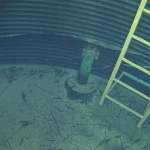
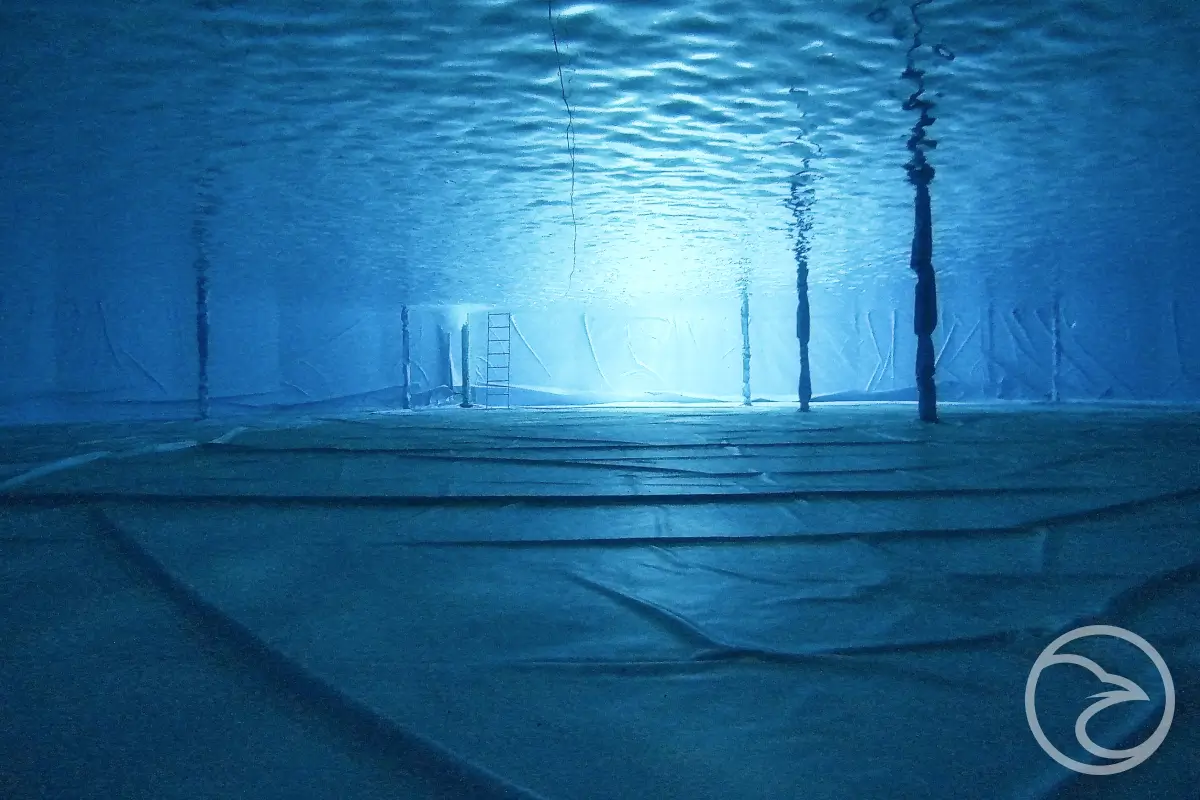
ROVs are particularly useful when assessing tank interiors. Instead of draining the tank or sending personnel inside, the vehicle is deployed directly into the water.
The operator then navigates through the tank while capturing high-resolution footage.
Inspectors can review:
- Internal walls
- Floor conditions
- Sediment accumulation
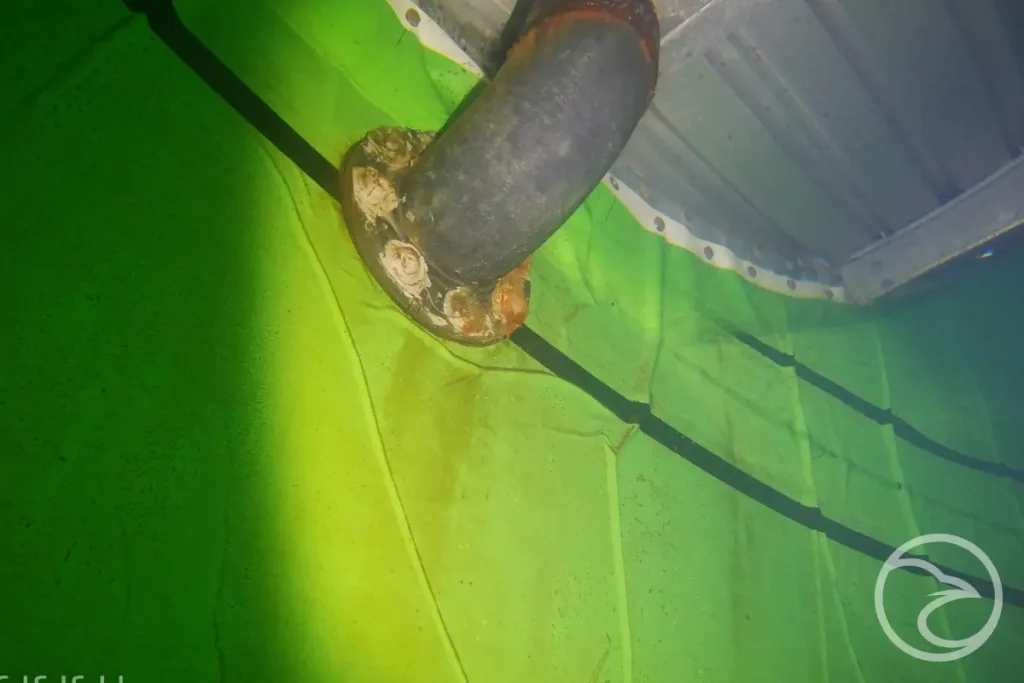
- Corrosion
- Structural defects
- Liner condition
The collected information can be used to support maintenance planning and asset management decisions.
Benefits of ROV Fire Tank Inspections
ROV technology offers several important advantages.
Improved Safety
Confined space entry presents inherent risks. Using an ROV reduces the need for personnel to enter potentially hazardous environments.
This significantly improves overall inspection safety.
Reduced Operational Disruption
Traditional inspections may require partial or complete tank shutdowns. ROV inspections can often be completed while the tank remains operational.
This helps minimise interruptions to facility operations.
Enhanced Visual Coverage
ROVs can access areas that may be difficult to inspect manually.
This improves inspection coverage and increases the likelihood of identifying hidden defects.
Better Documentation
Modern ROV systems capture high-quality images and video recordings.
This information can be included in inspection reports and used for future condition comparisons.
How Drone Inspections Work
Drone inspections focus primarily on external tank structures. Operators fly drones around the tank while collecting visual information.
Images and video footage are then reviewed by inspectors.
Drone assessments commonly examine:
- Roof condition
- Corrosion
- Structural damage
- Access equipment
- Pipework
- External coatings
Some advanced systems also use thermal imaging and specialised sensors.
Benefits of Drone Fire Tank Inspections
Drone technology has become increasingly popular because it offers several operational advantages.
Faster Data Collection
Large tanks can take considerable time to inspect manually. Drones can capture visual data much more quickly.
This improves inspection efficiency and reduces labour requirements.
Reduced Working at Heights Risks
Inspecting roofs and elevated structures often requires ladders, scaffolding, or elevated work platforms. Drones eliminate many of these access challenges.
This creates a safer inspection process.
Improved Asset Visibility
Drone footage provides detailed views of areas that may be difficult to access from the ground.
Inspectors can identify visible defects more effectively.
Cost Savings
Reduced labour requirements and faster inspections can contribute to lower overall inspection costs.
This can be particularly beneficial for large facilities with multiple assets.
Common Issues Identified Using ROVs and Drones
These technologies are capable of identifying a wide range of defects.
Common findings include:
Corrosion
Corrosion remains one of the most common fire tank issues.
ROVs and drones can identify:
- Surface corrosion
- Coating failures
- Advanced deterioration
- Structural corrosion
Early identification helps support preventative maintenance.
Sediment Buildup
ROVs are particularly effective at identifying sediment accumulation.
Excessive sediment can:
- Reduce storage capacity
- Affect water quality
- Restrict system performance
Routine inspections help monitor these conditions.
Liner Deterioration
Protective liners play an important role in tank preservation.
ROV footage can reveal:
- Cracks
- Peeling
- Delamination
- Surface damage
These issues may not be visible during external inspections.
Structural Defects
Both drones and ROVs can identify structural concerns.
Examples include:
- Cracking
- Surface damage
- Distortion
- Joint deterioration
Many of these issues are discussed further in our guide to common fire tank defects.
Limitations of ROV and Drone Inspections
While these technologies offer many advantages, they are not suitable for every situation.
Limited Physical Testing
ROVs and drones primarily provide visual information. They cannot replace all forms of physical testing or structural assessment.
Additional inspections may still be required.
Environmental Conditions
Inspection quality can be affected by environmental factors.
Examples include:
- Poor visibility
- Water turbidity
- Adverse weather
- Lighting limitations
These factors may influence data quality.
Equipment Access Constraints
Some tank designs may restrict equipment movement. Complex internal structures can sometimes limit inspection coverage.
Careful planning helps minimise these challenges.
Integrating Technology Into Fire Tank Maintenance Programs
ROVs and drones are most effective when used as part of a broader maintenance strategy. Technology should complement, rather than replace, traditional asset management practices.
A comprehensive fire tank inspection guide typically combines:
- Visual inspections
- Condition assessments
- Maintenance planning
- Defect monitoring
- Compliance activities
Using multiple assessment methods often provides the most accurate understanding of tank condition.
Supporting Compliance and Asset Management
Inspection technologies can also support compliance objectives.
The detailed visual information collected during inspections helps facility owners:
- Track asset condition
- Prioritise repairs
- Maintain inspection records
- Improve maintenance planning
This information may assist organisations working to meet AS1851 compliance requirements and other maintenance obligations.
The Future of Fire Tank Inspections
Inspection technology continues to evolve.
Future developments may include:
- Artificial intelligence analysis
- Automated defect detection
- Enhanced imaging systems
- Advanced condition monitoring
These innovations are likely to improve inspection accuracy and asset management outcomes.
As technology advances, organisations will gain even greater visibility into the condition of critical fire protection assets.
Conclusion
ROV and drone fire tank inspections are transforming the way fire water tanks are assessed. These technologies improve safety, reduce operational disruption, and provide valuable condition data that supports long-term asset management.
While they do not replace every aspect of traditional inspections, they offer a highly effective way to evaluate difficult-to-access areas and identify developing issues early.
When integrated into a structured AS1851 fire tank inspection program, ROVs and drones can help facility owners improve maintenance planning, support compliance activities, and enhance overall fire protection system reliability.