Industrial storage tanks are designed to operate reliably over long service lives, often under demanding conditions. While design quality and materials play a critical role, long-term reliability is not determined at installation alone. Over time, changing operating conditions, environmental exposure, and internal system behaviour can gradually influence performance. This is where tank performance monitoring becomes essential for maintaining industrial storage reliability.
Rather than focusing on isolated events or visible damage, monitoring provides insight into how systems evolve and respond to long-term stress.
Reliability as a Dynamic System Attribute
Industrial storage reliability should be viewed as a dynamic characteristic rather than a fixed state. From commissioning onward, tanks are subject to subtle changes in load patterns, internal conditions, and external influences. These changes may not immediately affect day-to-day operation, but they shape long-term system behaviour.
Tank performance monitoring helps capture these gradual shifts, allowing operators to understand how reliability develops—or declines—over time rather than relying on assumptions based on original design intent.
What Tank Performance Monitoring Really Means
Tank performance monitoring is not limited to a single measurement or indicator. Instead, it refers to the ongoing observation of system behaviour, trends, and operating conditions. This may include monitoring water levels, pressure stability, temperature variation, structural response, and internal condition indicators.
The value of monitoring lies in trend analysis rather than individual data points. A single reading rarely signals a problem, but patterns over time can reveal emerging performance issues long before they become operational concerns.
Identifying Gradual Performance Drift
One of the most common challenges in industrial storage systems is performance drift. Tanks rarely fail suddenly. Instead, small changes accumulate—slight variations in level behaviour, reduced flow efficiency, or changes in internal conditions.
Without monitoring, these shifts often go unnoticed. Tank performance monitoring provides the visibility needed to identify early-stage deviations from normal behaviour, supporting a clearer understanding of how reliability is changing across the system lifecycle.
Supporting Long-Term Decision-Making
Reliable monitoring data supports informed decision-making rather than reactive responses. When operators understand how a tank has behaved historically, they are better positioned to interpret current conditions accurately.
This historical context helps distinguish between normal variation and meaningful change. As a result, decisions related to operation, planning, or system review are based on evidence rather than assumptions, reducing uncertainty around long-term reliability.
Monitoring in Complex Industrial Environments
Industrial storage tanks often operate as part of larger, interconnected systems. Changes in upstream or downstream processes can influence tank performance in unexpected ways. Variations in usage frequency, storage duration, or operating loads can all affect long-term behaviour.
Tank performance monitoring helps capture how these external influences interact with the storage system itself. By observing system response over time, operators gain insight into how broader operational changes impact reliability.
Visibility Beyond What Can Be Seen
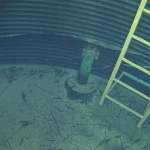
Many of the factors affecting long-term storage reliability occur out of sight. Internal conditions, structural response, and system interactions are not always visible during routine observation. This limited visibility contributes to delayed detection of performance decline.
Monitoring bridges this gap by providing indirect insight into system health. Even when physical access is limited, performance trends can highlight areas where closer attention may be required.
Reducing Uncertainty Around Long-Term Reliability
Uncertainty is one of the greatest challenges in managing industrial storage assets. Systems may appear stable for extended periods while underlying conditions slowly change. Without data, reliability assessments are often based on time in service rather than actual system behaviour.
Tank performance monitoring reduces this uncertainty by linking reliability assessment to measurable trends. This allows operators to understand not just how long a tank has been in service, but how it has actually performed during that time.

Monitoring as Part of a Lifecycle Perspective
When viewed through a lifecycle lens, monitoring becomes a continuous process rather than a periodic task. It supports reliability across all stages of system operation, from early use through long-term service.
By integrating monitoring into a broader lifecycle approach, industrial storage reliability is managed proactively. This perspective recognises that performance outcomes are shaped by long-term interaction between design, environment, and operational use.
Conclusion
Long-term industrial storage reliability depends on understanding how tank systems behave over time, not just how they were designed to perform initially. Tank performance monitoring provides the insight needed to identify gradual change, reduce uncertainty, and support informed system management.
Rather than reacting to visible issues alone, monitoring enables a deeper understanding of system behaviour across its service life. This system-wide perspective plays a key role in maintaining reliable industrial storage performance over the long term.
From a long-term perspective, maintaining industrial storage reliability depends on consistent long-term tank performance oversight that reflects how systems evolve throughout their service life.