Stormwater detention systems are designed to manage runoff, control peak flows, and protect downstream infrastructure. At the time of commissioning, these systems often perform exactly as engineered. However, over time, stormwater system efficiency can gradually decline — often without obvious warning signs. This performance drift is not usually caused by a single failure, but by a combination of physical, hydraulic, and environmental factors that evolve as the system ages.
Understanding why detention performance changes over time is essential for facility operators, engineers, and asset managers who rely on stormwater infrastructure to function predictably during rainfall events.
Design Conditions vs. Real-World Operation
Stormwater detention systems are typically designed using assumed flow rates, rainfall intensities, and catchment conditions. While these assumptions are reasonable at the design stage, real-world conditions rarely remain static.
Urban development, surface hardening, changes in drainage patterns, and even minor alterations within a catchment can increase runoff volumes and alter inflow timing. As a result, detention systems may begin operating outside their original hydraulic design envelope. Even when structures remain physically intact, stormwater system efficiency can be reduced simply because operating conditions have changed.
Sediment Accumulation and Volume Loss
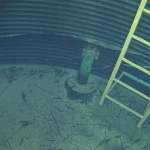
One of the most common contributors to declining efficiency is gradual sediment accumulation. Fine particles carried by runoff settle within detention tanks and basins over time. While this process is slow, it can significantly reduce effective storage volume.
As available volume decreases, detention systems fill more quickly during storm events. This shortens detention time and increases peak discharge rates, reducing the system’s ability to moderate downstream flows. Importantly, sediment build-up does not always present visible external symptoms, making efficiency loss difficult to detect without targeted evaluation.
Hydraulic Behaviour Changes Inside the System
Stormwater system efficiency depends not only on volume, but also on internal flow behaviour. Over time, changes in inlet conditions, outlet structures, or internal geometry can disrupt the intended hydraulic performance.
Uneven sediment distribution, partial blockages, or surface roughness changes can create preferential flow paths. This may lead to short-circuiting, where water bypasses the intended detention pathway. When this occurs, detention systems may still store water, but no longer achieve optimal flow attenuation.
Water Quality and Internal Environment Effects
The internal environment of stormwater systems can also influence long-term performance. Poor water quality, organic matter accumulation, and stagnant zones can alter internal surfaces and flow dynamics.
Biological growth, debris accumulation, and chemical interactions with construction materials may gradually affect hydraulic roughness and flow resistance. While these changes are often subtle, their combined effect can reduce overall system efficiency, especially during high-flow events.
Climate Variability and Load Stress
Climate patterns play an increasingly important role in stormwater system efficiency. More frequent intense rainfall events place higher hydraulic loads on detention systems than originally anticipated. Even well-designed systems may experience performance degradation when repeatedly exposed to conditions near or beyond their design limits.
Extended dry periods followed by sudden heavy rainfall can further exacerbate sediment mobilisation and internal flow disruption. Over time, repeated stress cycles accelerate efficiency drift, even when no obvious structural damage is present.
Infrastructure Age and System Interaction
Stormwater detention systems do not operate in isolation. Their performance is influenced by upstream drainage assets, downstream discharge points, and surrounding infrastructure. As connected systems age at different rates, mismatches in capacity and flow behaviour can emerge.
For example, upstream modifications may increase inflow rates, while downstream constraints limit discharge capacity. These interactions can compromise stormwater system efficiency, even when the detention structure itself remains unchanged.

Why Efficiency Decline Often Goes Unnoticed
One of the biggest challenges with stormwater detention systems is that efficiency loss is rarely dramatic or sudden. Systems often continue to function, but at a progressively lower level of performance. Without a clear failure event, reduced efficiency may go unnoticed until flooding, overflow, or downstream impacts occur during extreme weather.
This gradual nature makes stormwater system efficiency a critical but often underestimated aspect of long-term infrastructure performance.
Understanding Long-Term Stormwater Behaviour
Recognising how and why detention performance declines over time allows asset owners to make informed decisions about system planning and risk management. By understanding the factors that influence stormwater system efficiency, operators can better anticipate performance changes and evaluate how their infrastructure responds to evolving environmental and operational conditions.
In complex urban and industrial environments, stormwater detention systems are dynamic assets. Their long-term effectiveness depends not only on initial design, but on how they interact with changing catchments, climates, and internal system conditions over time.
Understanding long-term stormwater system behaviour provides valuable context for evaluating how detention systems respond to changing operational conditions.