Tank leakage is one of the most common issues affecting industrial, commercial and municipal storage systems. Even a small leak can lead to product loss, structural deterioration and expensive downtime if left unaddressed.
Leaks can develop in almost any type of tank, regardless of its size, material or application. Fire water tanks, potable water tanks, chemical storage tanks and fuel tanks all face different leakage risks throughout their service life.
In many cases, leakage develops gradually rather than appearing as a sudden failure. Early warning signs often go unnoticed until the problem becomes more severe.
Understanding why tanks leak, how leaks can be detected and what factors increase the risk helps asset owners make informed maintenance decisions. Regular inspections and timely intervention can significantly extend a tank’s service life while reducing operational costs.
This guide explains the most common causes of tank leakage, the warning signs to watch for, available detection methods and practical ways to minimise future risks.
What is Tank Leakage?
Tank leakage refers to the unintended escape of liquid through any part of a storage tank or its connected components. The leak may occur slowly over time or develop suddenly because of structural damage.
Not every leak is immediately visible. Some remain hidden behind insulation, beneath foundations or inside double-wall systems until significant damage has already occurred.
Leakage can affect both above-ground and underground storage tanks. It can also occur in newly installed tanks as well as ageing infrastructure.
Tank leaks may involve:
- tank walls
- floor plates
- welded joints
- bolted connections
- roofs
- bolted connections
- nozzles
- pipe penetrations
- valves and fittings
The severity of a leak depends on its location, size, stored product and the condition of the overall structure. While some leaks remain minor for extended periods, others can worsen quickly under continuous operational stress.
Leakage may be one sign of a more serious issue. Explore our water tank failure guide to understand other common failure mechanisms.
Why Tank Leakage Matters
Ignoring a leaking tank can create far more serious problems than the initial loss of liquid. Even small leaks often indicate that part of the tank structure is deteriorating.
Safety Risks
Leaking tanks may create hazardous conditions depending on the stored product.
Potential safety concerns include:
- slippery working surfaces
- contamination of surrounding areas
- increased fire risk for fuel storage
- exposure to hazardous chemicals
- reduced structural stability
Financial Impact
Even a minor leak can become expensive over time.
Businesses may experience:
- product loss
- higher operating costs
- emergency repair expenses
- production downtime
- increased maintenance requirements
Unexpected failures often cost significantly more than planned maintenance.
Environmental Consequences
Leaks can affect soil, groundwater and nearby waterways. Environmental contamination may require costly remediation and regulatory reporting.
For facilities handling hazardous materials, even small leaks can result in compliance issues and reputational damage.
Common Causes of Tank Leakage
Tank leakage rarely occurs without warning. In most cases, it develops gradually as materials deteriorate or operating conditions place increasing stress on the structure.
Understanding the underlying cause is essential for selecting the most effective inspection and maintenance strategy.
Corrosion
Corrosion remains one of the leading causes of tank leakage across many industries. As protective coatings wear down, metal surfaces become exposed to moisture, chemicals and oxygen. Over time, this process weakens the tank wall and may create pinholes or larger perforations.
Corrosion can develop both inside and outside the tank.
Common forms include:
- internal corrosion from stored liquids
- external corrosion caused by weather exposure
- galvanic corrosion between dissimilar metals
- microbiologically influenced corrosion (MIC)
- under-deposit corrosion
Regular inspections help identify corrosion before it compromises the tank’s structural integrity.
Mechanical Damage
Physical damage can create immediate leaks or weaken the tank over time. Even minor impacts may deform steel panels, damage welds or loosen connections.
Mechanical damage may result from:
- vehicle collisions
- heavy equipment impact
- dropped objects
- excessive vibration
- foundation settlement
- ground movement
Any visible deformation should be assessed promptly, even if no leak is immediately apparent.
Material Ageing
Every tank material experiences natural ageing throughout its service life. Continuous exposure to sunlight, temperature fluctuations and moisture gradually reduces material performance.
Ageing may affect:
- protective coatings
- sealants
- gaskets
- liners
- structural components
As materials lose flexibility or strength, the likelihood of leakage increases.
Installation Deficiencies
Some leaks originate long before the tank enters service. Improper installation can introduce weaknesses that only become noticeable after months or years of operation.
Examples include:
- uneven foundations
- incorrect bolt tightening
- poor sealing around penetrations
- inadequate support structures
- improper pipe alignment
Following manufacturer specifications during installation helps reduce long-term risks.
Manufacturing Defects
Although uncommon, manufacturing defects can contribute to premature leakage. Material flaws or fabrication errors may remain hidden until the tank is subjected to normal operating loads.
Potential defects include:
- incomplete weld penetration
- defective panels
- poor-quality coatings
- dimensional inaccuracies
- material imperfections
Quality assurance during fabrication helps minimise these risks.
Operational Stress
Daily operating conditions also influence the likelihood of leakage. Tanks that regularly experience changing loads or harsh environments are subjected to greater structural stress.
Contributing factors include:
- overfilling
- pressure fluctuations
- thermal expansion and contraction
- frequent filling and emptying cycles
- excessive vibration
Proper operating procedures reduce unnecessary stress on the tank structure.
Inadequate Maintenance
Routine maintenance plays a critical role in preventing leaks. Small defects often become major failures when inspections are delayed or minor issues remain unresolved.
Common maintenance-related factors include:
- delayed inspections
- neglected corrosion
- blocked drainage systems
- damaged coatings
- worn seals
- untreated minor leaks
A proactive water tank maintenance programme helps identify minor defects before they develop into leaks, extending service life and reducing long-term operating costs.
Signs that a Water Tank may be Leaking
Tank leaks are not always obvious. Many develop slowly and remain undetected until they begin affecting operations or causing visible damage.
Recognising the early warning signs allows facility managers to investigate potential issues before they become more serious.
Unexplained Loss of Liquid
A gradual drop in liquid level is often the first indication of a leak. If usage remains consistent but the tank requires more frequent refilling, leakage should be considered as a possible cause.
Comparing historical consumption records with current usage can help identify unexpected losses.
Wet Areas Around the Tank
Persistent moisture around the base of the tank should never be ignored. Wet patches that remain after dry weather may indicate liquid escaping through the tank wall, floor or connected pipework.
Standing water may also accelerate external corrosion and foundation deterioration.
Rust Stains and Corrosion
Visible corrosion often appears before a leak develops. Rust streaks, blistering paint or deteriorating coatings may indicate that moisture has already reached the underlying metal.
Pay particular attention to:
- welded joints
- base plates
- bolted connections
- roof seams
- pipe penetrations
Early treatment of corrosion can prevent future leakage.
Cracks or Structural Deformation
Changes to the tank’s shape may indicate that structural stresses are increasing.
Examples include:
- bulging walls
- cracked concrete
- distorted panels
- uneven settlement
- misaligned pipe connections
Structural movement should always be investigated by qualified personnel.
Unusual Pressure or Pump Behaviour
Unexpected pressure fluctuations may signal that a system is no longer fully sealed.
Operators may notice:
- pumps cycling more frequently
- pressure dropping unexpectedly
- difficulty maintaining system pressure
- increased refill times
While these symptoms can have several causes, tank leakage should be included in the investigation.
Unusual Odours
Fuel, chemicals and wastewater often produce noticeable odours when escaping from storage systems. New or stronger smells around the tank may indicate a developing leak, even when no liquid is visible.
Vegetation Changes
For underground or partially buried tanks, changes in surrounding vegetation may provide an early warning.
Potential signs include:
- unusually green patches
- dying vegetation
- permanently damp soil
- unexplained ground subsidence
These changes should be investigated alongside other inspection findings.
Higher Operating Costs
A leaking tank often affects more than the stored liquid. Increased pumping, product loss and repeated refilling can all contribute to higher operating costs.
Facilities that monitor utility usage may identify leakage through unexpected increases in water or product consumption.
Different Types of Water Tank Leaks
Not all leaks develop in the same location or for the same reason. Understanding where leakage occurs helps inspectors identify the underlying cause more efficiently.
Wall Leaks
Tank walls are continuously exposed to environmental conditions and internal pressure. Corrosion, impact damage and material ageing may eventually create small perforations or cracks.
Wall leaks often begin as slow seepage before becoming more noticeable.
Floor Leaks
The tank floor supports the full weight of the stored liquid and is frequently exposed to moisture, sediment and corrosion. Leaks in the floor may remain hidden until significant product loss has occurred.
Common contributing factors include:
- internal corrosion
- foundation movement
- settlement
- coating failure
Weld Leaks
Welded joints experience repeated stress during filling and emptying cycles. Over time, fatigue, corrosion or fabrication defects may compromise the weld.
Routine inspection of welded connections is essential for steel tanks.
Joint and Connection Leaks
Bolted panel tanks and connected pipework rely on seals and gaskets to remain watertight.
Leakage may develop around:
- bolted joints
- flanged connections
- pipe penetrations
- valves
- nozzles
Many of these leaks can be identified during routine visual inspections.
Roof Leaks
Roof leaks allow rainwater or contaminants to enter the tank while stored liquid may also escape through damaged seals or joints.
Signs of roof-related leakage include:
- water ingress
- corrosion around roof seams
- damaged flashing
- deteriorated roof coatings
Underground Leaks
Leaks from underground tanks are often the most difficult to detect because the escaping liquid is hidden below the surface. In many cases, the first indication is unexplained product loss or environmental contamination.
Regular monitoring and specialised leak detection methods help identify underground leaks before they become major environmental issues.
Which Water Tanks are Most Vulnerable to Leakage?
Tank leakage can affect virtually any storage system. However, the causes and risks vary depending on the tank’s purpose, operating conditions and the type of liquid being stored.
Understanding these differences helps operators develop more effective inspection and maintenance strategies.
Fire Water Tanks
Fire water tanks spend long periods in standby mode. Because they are not emptied frequently, corrosion, sediment accumulation and ageing components may go unnoticed.
Regular inspections help verify that the tank remains ready for emergency use.
Common leakage risks include:
- internal corrosion
- deteriorated seals
- coating failure
- ageing pipe connections
If your facility operates a fire water storage system, following a comprehensive fire tank inspection checklist can help ensure critical inspection points are not overlooked during routine assessments.
Potable Water Tanks
Potable water tanks must remain completely watertight to protect water quality. Even a minor leak can allow contaminants to enter the system or result in unnecessary water loss.
Operators should pay close attention to:
- roof seals
- access hatches
- pipe penetrations
- panel joints
Maintaining hygienic conditions is just as important as preventing structural deterioration.
Chemical Storage Tanks
Chemical storage tanks operate in demanding environments where stored products may accelerate material degradation. Leakage risks depend on the chemical’s concentration, temperature and compatibility with the tank material.
Regular condition assessments help identify early signs of chemical attack before structural damage develops.
Fuel Storage Tanks
Fuel leaks present both environmental and safety concerns. Even small losses can contaminate surrounding soil while increasing fire hazards.
Routine monitoring should focus on:
- welds
- pipe connections
- valves
- secondary containment systems
Early detection helps minimise environmental impact and operational disruption.
Wastewater Tanks
Wastewater tanks are continuously exposed to corrosive environments created by biological activity and dissolved contaminants. Over time, these conditions may accelerate corrosion, coating deterioration and concrete degradation.
Preventive maintenance is essential for extending service life.
Agricultural and Irrigation Tanks
Agricultural tanks often operate in harsh outdoor conditions. Continuous exposure to sunlight, changing temperatures and seasonal demand can accelerate material ageing.
Operators should monitor for:
- UV damage
- corrosion
- damaged liners
- leaking fittings
Regular inspections help maintain reliable water storage throughout the year.
How Water Tank Material Affects Leakage Risk
The material used to construct a tank has a significant influence on how leakage develops. Each material has different strengths, limitations and maintenance requirements.
Understanding these characteristics helps owners select appropriate inspection methods and preventive measures.
Steel Tanks
Steel remains one of the most widely used materials for industrial storage tanks because of its strength and durability. However, steel is susceptible to corrosion when protective coatings deteriorate or moisture reaches exposed surfaces.
Common issues include:
- internal corrosion
- external corrosion
- weld deterioration
- coating damage
Regular inspections and corrosion management are essential for extending service life.
Galvanised Steel Tanks
Galvanised steel tanks benefit from a protective zinc coating that improves corrosion resistance. As this coating gradually wears away, the underlying steel becomes more vulnerable to rust and localised leakage.
Periodic inspections help determine when recoating or maintenance is required.
Concrete Water Tanks
Concrete tanks provide excellent structural strength but may develop cracks as they age or settle.
Leakage may result from:
- structural movement
- shrinkage cracking
- deteriorated joints
- reinforcement corrosion
Small cracks should be evaluated before they expand into larger structural problems.
Fibreglass (GRP) Panel Tanks
Glass reinforced plastic (GRP) tanks offer excellent corrosion resistance and require relatively little maintenance.
Despite these advantages, damage may still occur through:
- impact
- UV exposure
- manufacturing defects
- long-term material fatigue
Routine inspections help identify surface defects before they affect performance.
Polyethylene Storage Tanks
Polyethylene tanks are lightweight and resistant to many chemicals. However, prolonged exposure to sunlight and changing temperatures can gradually reduce material performance.
Potential concerns include:
- UV degradation
- deformation
- stress cracking
- damaged fittings
Correct installation and routine inspections help minimise these risks.
Stainless Steel Tanks
Stainless steel provides excellent resistance to corrosion in many environments. It is widely used where hygiene and durability are critical.
However, leakage may still occur because of:
- chloride attack
- poor welding
- mechanical damage
- seal deterioration
Regular inspections remain important even for highly corrosion-resistant materials.
How Water Tank Leaks are Detected
Finding a tank leak is not always straightforward. Some leaks are visible during routine inspections, while others require specialised testing equipment.
The most effective approach often combines visual assessments with non-destructive testing and ongoing monitoring.
Visual Inspection
Visual inspection is usually the first step in identifying potential leakage. Experienced inspectors look for signs of deterioration that may indicate developing problems.
During an inspection, attention is typically given to:
- corrosion
- wet areas
- cracked coatings
- damaged seals
- rust staining
- structural deformation
Although visual inspections cannot detect every hidden defect, they remain an essential part of any maintenance programme.
Liquid Level Monitoring
Unexpected changes in liquid levels can indicate that a tank is losing product. Modern monitoring systems make it easier to identify gradual losses that might otherwise remain unnoticed.
Comparing current readings with historical operating data often provides valuable insight into developing leakage issues.
Pressure Testing
Pressure testing evaluates whether a tank or connected system can maintain pressure under controlled conditions. A pressure drop may indicate leakage or another fault that requires further investigation.
Because this method requires careful planning, it is generally performed during scheduled inspections or maintenance activities.
Ultrasonic Testing
Ultrasonic testing is a widely used non-destructive inspection method for steel tanks. The technology measures material thickness without damaging the tank, allowing inspectors to identify corrosion and wall thinning before leaks develop.
It is particularly effective for monitoring ageing tanks exposed to corrosive environments.
Thermal Imaging
Thermal imaging cameras can identify temperature differences that may indicate escaping liquid or moisture trapped within the structure.
Although thermal imaging does not detect every leak, it provides valuable information when combined with other inspection methods.
Drone Inspections
Drone technology has become increasingly valuable for inspecting large storage tanks. High-resolution imagery allows inspectors to assess roofs, elevated structures and difficult-to-access areas without extensive scaffolding or prolonged shutdowns.
Drone inspections may help identify:
- coating deterioration
- corrosion
- roof damage
- standing water
- visible leakage
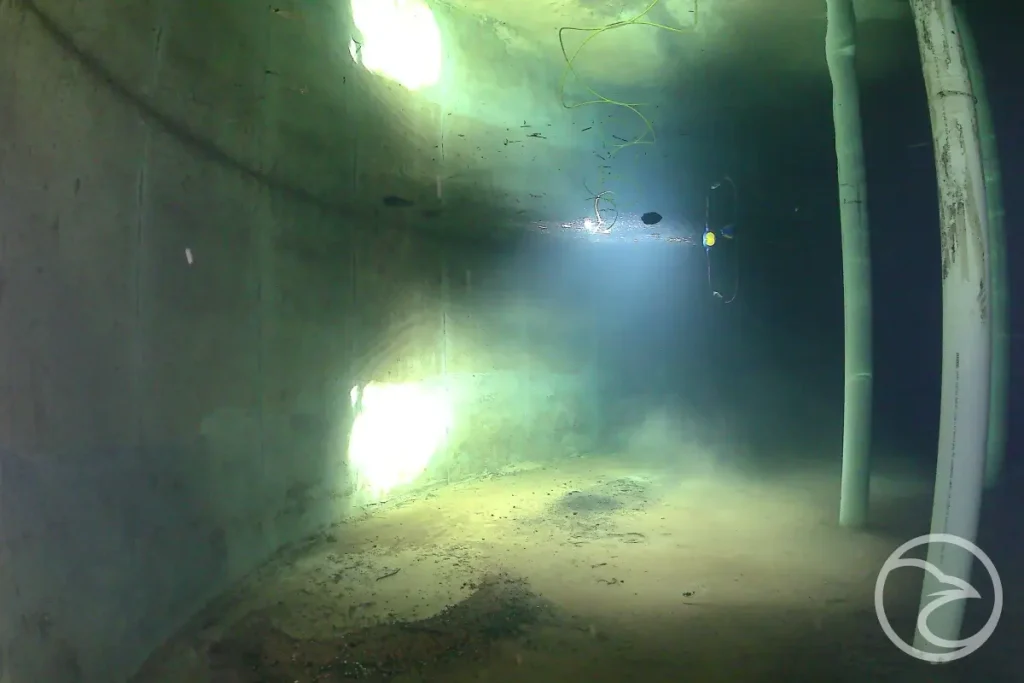
For tanks that are difficult to access or cannot be taken out of service, remotely operated vehicles (ROVs) provide an efficient inspection solution. Learn more about this technology in our guide to advancing water tank inspections with ROVs.
Continuous Monitoring Systems
Many modern facilities use automated monitoring systems to detect abnormal operating conditions.
These systems may monitor:
- liquid levels
- pressure
- flow rates
- temperature
- alarm conditions
Continuous monitoring helps operators respond more quickly to developing problems and supports predictive maintenance strategies.
Can a Leaking Water Tank be Repaired?
A leaking tank does not always need to be replaced. In many cases, timely intervention allows defects to be repaired before significant structural damage occurs. The most appropriate solution depends on the cause of the leak, the condition of the tank and the extent of deterioration.
Minor issues are generally easier to address than widespread structural failures.
Repairs may be possible when the leak is associated with:
- localised corrosion
- damaged seals
- leaking joints
- isolated coating failure
- minor weld defects
More extensive deterioration may require partial reconstruction or, in some cases, complete tank replacement. For this reason, a detailed condition assessment should always be completed before selecting a repair strategy.
For tanks with localised damage, professional water tank repair services may help restore integrity and extend the asset’s operational life.
What Happens if Tank Leakage is Ignored?
Even a small leak can become a much larger problem when left unresolved. As deterioration continues, the affected area often expands, making repairs more complex and expensive.
Ignoring leakage may result in:
- continued product loss
- accelerated corrosion
- structural weakening
- environmental contamination
- equipment damage
- regulatory compliance issues
- unplanned downtime
- higher repair costs
Addressing problems early is usually far more cost-effective than responding to an emergency failure.
How to Reduce the Risk of Tank Leakage
While no storage tank is completely immune to leakage, regular maintenance significantly reduces the likelihood of unexpected failures.
A proactive maintenance programme helps identify small defects before they become major structural issues.
Recommended practices include:
- scheduling regular inspections
- monitoring corrosion
- maintaining protective coatings
- repairing minor defects promptly
- inspecting seals and fittings
- cleaning tanks at appropriate intervals
- monitoring liquid levels
- keeping accurate maintenance records
Combining routine inspections with preventive maintenance extends service life and improves long-term reliability. Regular tank cleaning helps remove sediment, debris and contaminants that may accelerate corrosion and contribute to long-term tank deterioration.
When Should You Seek Professional Assessment?
Some leakage issues are easy to identify, while others require specialised inspection techniques. Professional assessment should be considered whenever there is evidence that the tank’s condition may be deteriorating.
An inspection is recommended if you observe:
- unexplained liquid loss
- recurring leaks
- visible corrosion
- structural movement
- coating failure
- damaged welds
- foundation settlement
- signs of contamination
Early assessment allows defects to be identified before they affect safety, compliance or operational performance.
Conclusion
Tank leakage is rarely an isolated event. In most cases, it develops gradually as materials age, corrosion progresses or operating conditions place increasing stress on the structure.
Understanding the causes of leakage, recognising early warning signs and implementing regular inspections are key to maintaining safe and reliable storage systems.
Different tank types and construction materials present unique challenges, making condition-based maintenance essential for long-term performance.
By identifying problems early and responding before significant deterioration occurs, organisations can reduce repair costs, minimise downtime and extend the operational life of their storage assets.