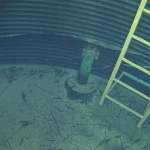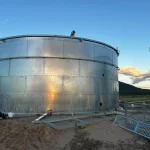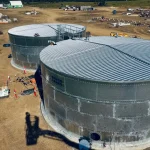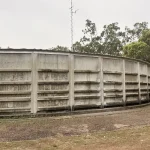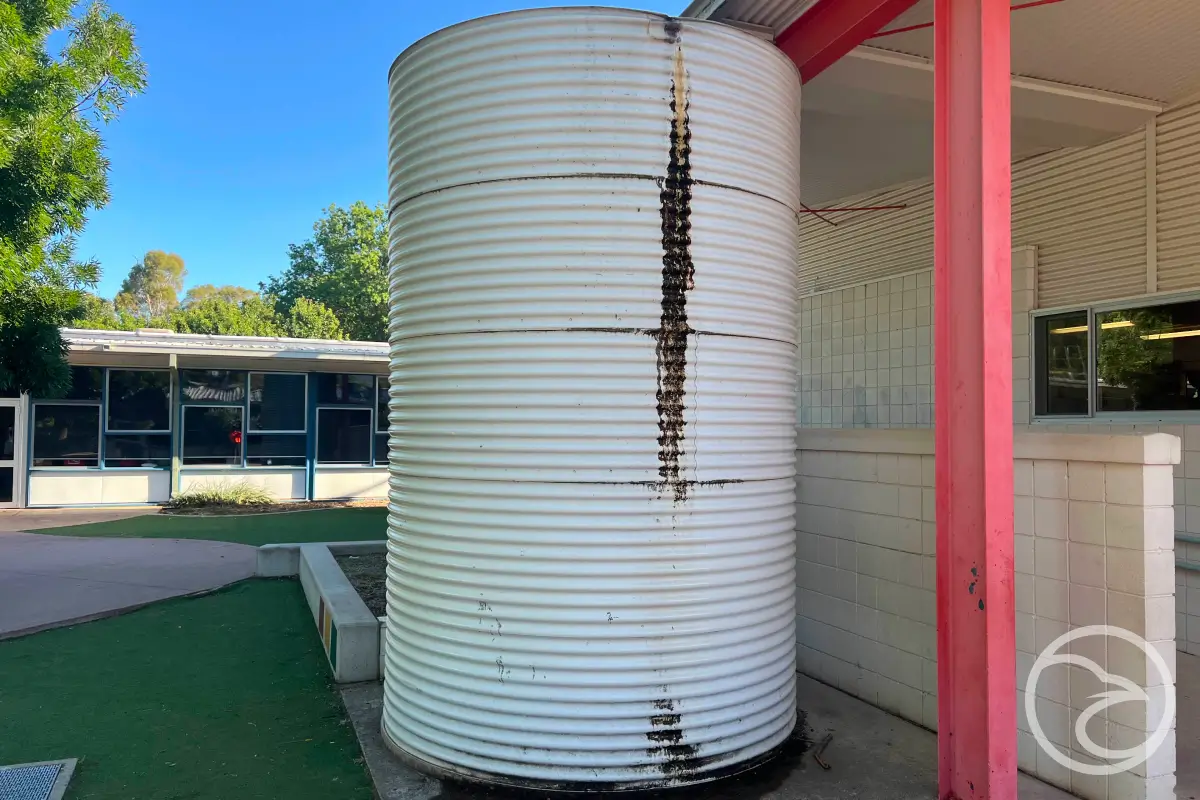
Water storage tanks are designed to provide reliable service for many years. However, every tank is exposed to ageing, water pressure, environmental conditions, and ongoing operational stresses.
Over time, these factors can affect individual components or the complete tank structure. Problems may begin with a small leak, local corrosion, damaged seals, or minor deformation.
If deterioration continues, the tank can eventually lose its ability to safely contain water. In severe cases, structural instability or significant water loss can occur.
Water tank failure does not always mean sudden collapse. The term can describe several conditions where a tank no longer performs as intended. Understanding how tanks fail helps facility owners recognise warning signs earlier. It can also help determine whether maintenance, repair, refurbishment, or replacement is appropriate.
This guide explains common water tank failure types, internal and external causes, and differences between common tank materials. It also covers early detection, repair options, and practical prevention.
What is Water Tank Failure?
Water tank failure occurs when a tank or one of its critical components can no longer perform its intended function. Failure can be gradual or sudden.
A leaking joint is one form of functional failure. Severe corrosion causing loss of structural capacity represents a more significant problem.
Tank failure can involve:
- loss of watertightness;
- structural instability;
- excessive deformation;
- panel or wall damage;
- joint failure;
- foundation problems;
- internal component failure;
- roof deterioration;
- connection failure;
- material degradation.
Some failures remain localised for a long time. Others can progress and affect several parts of the tank. Research into storage tank deterioration identifies corrosion, deformation, fabrication defects, foundation settlement, and operational problems among important failure mechanisms.
The visible problem is therefore not always the root cause.
What Causes Water Tanks to Fail?
There is rarely one universal cause of tank failure. Tank condition reflects a combination of design, installation, material, environment, operation, and maintenance.
Common contributing factors include:
- corrosion;
- material ageing;
- poor installation;
- foundation movement;
- excessive loads;
- damaged supports;
- deteriorated seals;
- unsuitable water chemistry;
- UV exposure;
- temperature changes;
- mechanical impact;
- poor maintenance;
- inappropriate repairs;
- pipework stress;
- manufacturing or construction defects.
These factors can also interact. For example, foundation movement can distort a tank. That movement can then increase stress around joints and pipe connections.
A resulting leak may appear to be a seal problem when structural movement is the actual cause.
Main Types of Water Tank Failure
Tank failure can be classified in several ways. Understanding the type of failure helps determine its seriousness and likely cause.
Leakage Failure
The tank loses water through an area that should remain watertight.
Leakage may occur around:
- joints;
- seals;
- seams;
- cracks;
- fittings;
- penetrations;
- tank floors;
- damaged panels.
A minor leak may remain stable temporarily, but it should still be investigated. Tank leaks can develop for several reasons. Our tank leakage guide explains common causes and what to do when a leak is found.
Structural Failure
Structural failure occurs when part of the tank can no longer safely carry its intended loads. Possible signs include significant deformation, buckling, damaged supports, or major panel movement.
Structural deterioration deserves prompt professional assessment.
Component Failure
The tank structure may remain sound while an individual component fails.
Examples include:
- bolts;
- tie rods;
- brackets;
- seals;
- valves;
- fittings;
- roof supports;
- ladders;
- pipe connections.
Component problems can sometimes create larger structural or containment problems if ignored.
Foundation Failure
A tank relies on stable support. Settlement or movement can change how loads are distributed through the structure.
Storage tank research identifies foundation settlement as one cause of deformation and structural problems. Foundation-related failures can create secondary problems in walls, floors, joints, and connections.
Material Failure
Tank materials can deteriorate differently. Steel may corrode. GRP can crack or delaminate. Seals can lose flexibility. Understanding the material is therefore essential when assessing failure.
Internal vs External Water Tank Failure
Tank deterioration can develop from either side of the structure. This distinction is important because external appearance does not always reveal internal condition.
Internal Tank Failure
Internal surfaces remain continuously or repeatedly exposed to stored water. Water chemistry, sediment, coatings, temperature, and tank material can influence deterioration.
Internal problems can include:
- corrosion;
- pitting;
- damaged coatings;
- liner deterioration;
- sediment-related deterioration;
- damaged internal supports;
- corrosion around bolts;
- seal deterioration;
- cracking;
- biological deposits.
Some internal defects can remain hidden during normal operation. For metal tanks, pitting can create concentrated areas of material loss rather than obvious uniform corrosion. Corrosion is widely recognised as a major storage tank degradation mechanism.
This is one reason internal condition assessment can be valuable.
External Tank Failure
External conditions can also influence tank performance. Weather, moisture, UV exposure, physical damage, and surrounding infrastructure all play a role.
Common external problems include:
- external corrosion;
- damaged coatings;
- impact damage;
- panel deformation;
- foundation movement;
- roof damage;
- pipework stress;
- damaged access systems;
- standing water around the base.
Drainage around the tank deserves particular attention. Persistent moisture can contribute to deterioration of tanks, supports, foundations, and external components.
Persistent moisture can contribute to deterioration of tanks, supports, foundations, and external components. External checks are useful because many early warning signs can be identified without entering the tank.
Corrosion and Water Tank Failure
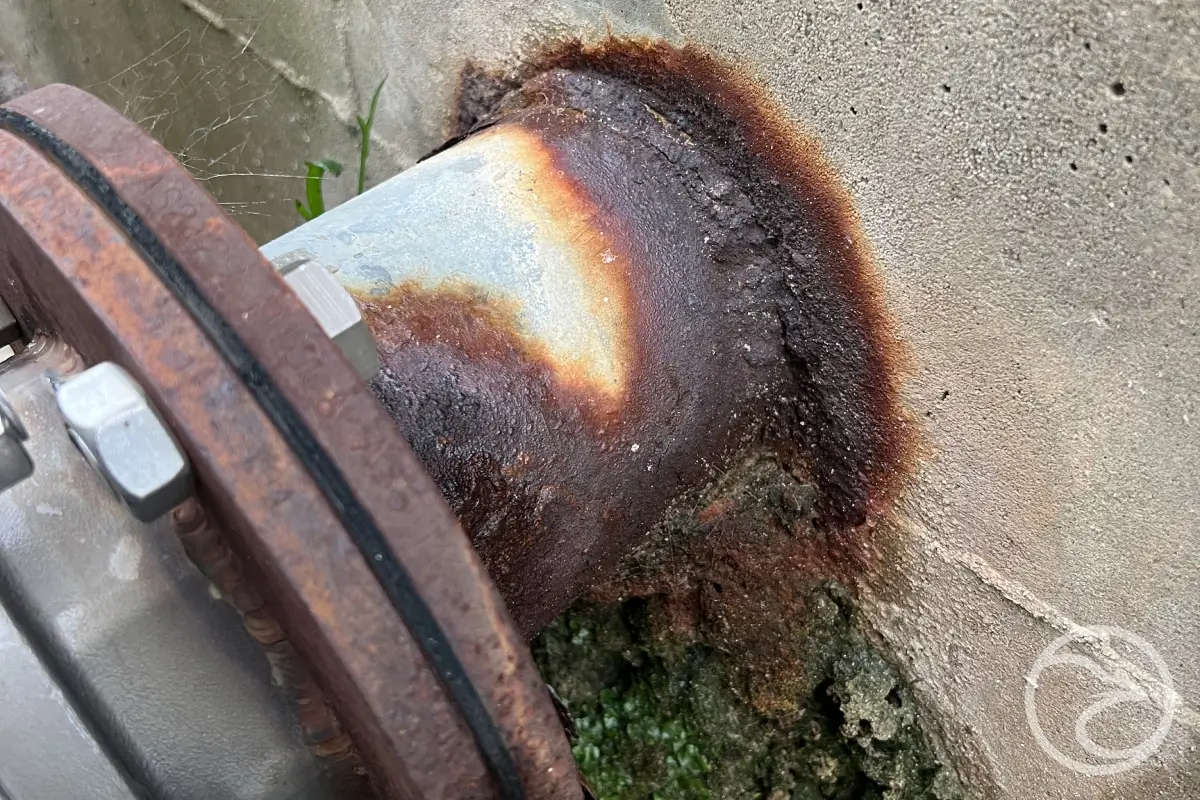
Corrosion is particularly important for metal water tanks. It gradually removes material and can reduce wall or component thickness. Corrosion can be general or highly localised.
Pitting is especially important because a relatively small area can experience significant material loss.
Common areas of concern include:
- tank floors;
- panel edges;
- joints;
- bolts;
- welds;
- fittings;
- supports;
- areas retaining moisture.
Corrosion can occur internally or externally. Research into storage tank condition assessment identifies several corrosion mechanisms, including internal, external, pitting, galvanic, and microbiologically influenced corrosion.
The presence of rust does not automatically mean complete tank failure. However, its extent, depth, location, and progression should be understood.
HDG Water Tank Failure
Hot-dip galvanised tanks use a zinc coating to protect the underlying steel. This provides strong corrosion protection but does not make the tank immune to deterioration.
Over time, the protective zinc layer can be consumed or damaged.
HDG tank problems can include:
- local corrosion;
- coating deterioration;
- corrosion around fasteners;
- joint leakage;
- damaged seals;
- panel deformation;
- internal component deterioration;
- foundation-related movement.
Water chemistry can influence the behaviour of galvanized surfaces. Mechanical damage can also expose areas of the underlying material.
Another concern is persistent moisture around connections or external areas. The important point is to monitor change. A small surface mark and a rapidly expanding corrosion area should not receive the same response.
Stainless Steel Water Tank Failure
Stainless steel offers excellent corrosion resistance for suitable water storage applications. However, “stainless” does not mean completely corrosion-proof. Stainless steel depends on a protective passive surface layer.
Certain environmental conditions can disrupt this protection and cause localised corrosion.
Possible stainless steel tank problems include:
- pitting;
- crevice corrosion;
- weld-related deterioration;
- stress-related cracking;
- joint leakage;
- deformation;
- fitting problems.
Chlorides can be particularly important for some stainless steel grades and environments. Material grade, water chemistry, temperature, fabrication, and surface condition can influence performance.
Tank condition should therefore be assessed according to the specific stainless steel system rather than assuming corrosion cannot occur.
GRP Water Tank Failure
GRP tanks behave differently from metal tanks. Glass-reinforced plastic does not rust like steel, but it has its own potential failure mechanisms.
Common GRP tank problems include:
- panel cracking;
- delamination;
- surface deterioration;
- joint leakage;
- gasket failure;
- panel distortion;
- damaged internal supports;
- damaged fittings;
- ageing of metallic components.
Installation quality is particularly important for sectional GRP tanks. Uneven foundations can create uneven loading across panels, joints, and supports. Pipe movement can also transfer unwanted forces into tank connections.
Bulging panels can indicate excessive loading, weakened supports, or structural movement. GRP tanks should therefore be assessed as complete systems.
The panels may remain in good condition while seals, bolts, or internal supports deteriorate.
Joint and Seal Failure
Sectional water tanks contain many joints. These connections depend on correct assembly and effective sealing. Over time, seals can compress, harden, move, or otherwise deteriorate.
Possible warning signs include:
- damp joints;
- dripping water;
- mineral deposits;
- staining;
- repeated leakage;
- movement between panels.
Joint leakage can sometimes be repaired locally. However, recurring leakage deserves broader investigation.
Structural movement, loose components, deformation, or foundation problems may be contributing to repeated seal failure.
Tank Panel Deformation and Bulging
Tank walls experience continuous pressure when filled. The structure is designed to manage these loads.
Unexpected bulging, bowing, buckling, or movement can indicate that loads are no longer being distributed as intended.
Possible causes include:
- failed internal supports;
- foundation movement;
- excessive loading;
- damaged panels;
- incorrect installation;
- weakened connections.
Deformation is a recognised storage tank degradation mechanism and can result from foundation settlement and abnormal loading conditions. New or increasing deformation should be investigated promptly.
Foundation and Support Failure
The tank cannot be considered separately from what supports it. A stable foundation distributes the tank’s considerable weight. When the foundation moves unevenly, different sections of the tank can experience additional stress.
Possible warning signs include:
- uneven tank alignment;
- settlement;
- cracks around foundations;
- local panel deformation;
- recurring joint leaks;
- movement around pipe connections;
- tank floor distortion.
Foundation problems can become particularly serious because they affect the entire load path. Repairing individual leaks without correcting underlying settlement may not provide a lasting solution.
Pipework and Connection Failures
External pipework can transfer loads directly into the tank. Poorly supported pipes can place stress around inlets, outlets, and penetrations. Thermal expansion, vibration, equipment changes, and accidental impact can increase these forces.
Look for:
- cracking around connections;
- distorted fittings;
- leaks around penetrations;
- panel movement;
- damaged seals;
- unsupported pipework.
A leaking fitting may therefore require more than resealing. The connected pipe system should also be considered.
Roof and Access Component Failure
Tank roofs protect stored water and internal components. Roof deterioration may not immediately cause loss of containment, but it can create other risks.
Common problems include:
- corrosion;
- damaged roof panels;
- weakened supports;
- leaking roof joints;
- damaged hatches;
- failed screens;
- unsafe access equipment.
Damaged openings can also allow debris, insects, animals, or other contaminants into the tank. Roof and access condition should therefore form part of routine tank assessment.
What Factors Increase the Risk of Water Tank Failure?
Tank age is only one factor. Two tanks installed in the same year can have very different conditions decades later.
Failure risk can be influenced by:
- material selection;
- manufacturing quality;
- installation;
- water chemistry;
- tank usage;
- filling cycles;
- environmental exposure;
- temperature;
- UV exposure;
- structural loading;
- foundation condition;
- maintenance frequency;
- inspection history;
- previous repairs.
Changes in tank use can also matter. Research shows that storing a different product or one with different density or corrosiveness can introduce loads and degradation mechanisms outside the original design.
A tank should therefore be considered in its current operating environment.
Early Warning Signs of Water Tank Failure
Major failures often have earlier indicators. Recognising them can provide more time to investigate and plan corrective work.
Facility owners should watch for:
- unexplained water loss;
- visible leaks;
- rust staining;
- corrosion;
- damaged coatings;
- cracks;
- bulging;
- unusual panel movement;
- deteriorated seals;
- loose or damaged bolts;
- foundation movement;
- damaged fittings;
- recurring repairs;
- unusual noises during filling;
- water accumulating around the tank.
Water staining around panel joints can be particularly useful evidence of developing leakage. GRP tanks can also show cracking, panel distortion, damaged joints, and corrosion around metallic components.
One warning sign does not automatically mean catastrophic failure is imminent. It does mean the cause should be understood.
Can You Assess a Water Tank Yourself?
Facility owners can perform basic external observations. You do not need specialist equipment to notice an active leak or significantly distorted panel.
A simple visual check can consider:
- new leaks;
- rust;
- staining;
- visible cracks;
- bulging;
- damaged roof sections;
- loose external components;
- standing water;
- foundation changes;
- pipe movement.
Photographs can be useful. Take photographs from consistent locations and compare them over time. Maintenance records can also reveal recurring defects.
However, visual observation has clear limitations. You cannot determine remaining metal thickness simply by looking at a corroded surface. Likewise, the depth of GRP damage may not be obvious externally.
Hidden internal deterioration can require professional inspection and appropriate testing.
When Should a Tank Problem be Treated as Urgent?
Some observations justify more immediate attention.
These can include:
- rapidly increasing leaks;
- major deformation;
- significant structural movement;
- failed supports;
- sudden water loss;
- large cracks;
- rapidly progressing corrosion;
- foundation movement;
- unusual movement while filling.
The tank’s application also affects urgency. Failure of a critical fire water tank can have different consequences from failure of a small irrigation tank. When structural stability is uncertain, avoid making assumptions based solely on appearance.
Professional assessment should determine whether continued operation is appropriate.
What Should You do After Finding Tank Damage?
First, document the condition. Record where the problem appears and when it was first noticed. Photographs can help establish progression.
Next, consider whether the problem presents an immediate safety or operational risk. Avoid attempting improvised structural repairs.
The next steps may include:
- restricting access around the tank;
- monitoring water level;
- arranging professional inspection;
- identifying the underlying cause;
- assessing the extent of deterioration;
- determining repairability;
- planning repair, refurbishment, or replacement.
Do not focus exclusively on the visible defect. A leak is a symptom. Understanding why the tank leaked is usually more valuable for preventing recurrence.
The Role of Professional Tank Inspection
Professional inspection provides more detailed information than routine visual monitoring. The appropriate inspection method depends on the tank material and suspected damage.
Assessment may examine:
- structural condition;
- corrosion;
- material thickness;
- panels;
- joints;
- internal supports;
- foundations;
- coatings;
- liners;
- penetrations;
- fittings;
- previous repairs.
For steel tanks, condition assessment can include systematic examination of structural components and deterioration. Water Corporation guidance, for example, uses condition assessment to identify defects and determine maintenance or renewal requirements.
The goal is not simply to produce a list of visible defects. A useful assessment helps determine severity, cause, progression, and appropriate next actions.
Can a Failed Water Tank be Repaired?
Yes, many tank problems can be repaired. However, repairability depends on the extent and cause of damage.
Potential repairs can include:
- replacing seals;
- repairing joints;
- replacing fasteners;
- repairing local GRP damage;
- replacing panels;
- repairing fittings;
- addressing coatings;
- installing suitable liners;
- repairing structural components;
- correcting support problems.
Localised defects are generally different from widespread structural deterioration. A small damaged component may be practical to replace. A tank with extensive material loss, widespread structural problems, or repeated failures may require larger refurbishment or replacement.
The engineering assessment matters because appearance alone cannot determine repairability. Visit our water tank repair page to explore repair options for leaks, structural damage, and deteriorated tank components.
Repair vs Refurbishment vs Replacement
These terms describe different levels of intervention.
Repair generally addresses a specific defect.
Refurbishment addresses broader deterioration across multiple components or areas. For ageing tanks requiring more extensive work, water tank refurbishment may provide an alternative to repeated individual repairs.
Replacement involves retiring the existing tank and installing a new storage solution.
The decision can depend on:
- structural condition;
- extent of deterioration;
- tank age;
- failure history;
- repair history;
- required capacity;
- operational importance;
- future maintenance needs;
- expected remaining service life.
Cost matters, but it should not be considered alone. Repeatedly repairing a tank with widespread deterioration can become less practical than planned replacement. Conversely, one localised defect does not necessarily justify replacing an otherwise serviceable tank.
Why Repeated Repairs can be a Warning Sign
One repair does not indicate that a tank has reached the end of its life. Repeated failures deserve more attention. Consider a panel joint that leaks every year. Replacing the seal may repeatedly stop the immediate leak.
However, recurring failure could indicate deformation, foundation movement, or another unresolved structural issue. The same principle applies to corrosion. Repeated surface repairs may not solve persistent moisture, unsuitable materials, or water chemistry problems.
Repair history should therefore form part of condition assessment.
How Can Water Tank Failure be Prevented?
No maintenance program can guarantee that a tank will never fail. However, many problems can be identified earlier and managed more effectively.
A preventative approach should include:
- routine external observations;
- scheduled professional inspections;
- appropriate cleaning;
- corrosion monitoring;
- joint and seal checks;
- foundation monitoring;
- pipe support checks;
- timely repairs;
- maintenance records;
- photographic documentation.
Maintenance is particularly important because deterioration often progresses gradually. Research into steel storage tanks emphasises the relationship between adequate design, construction, inspection, and regular maintenance for long service.
Prevention is therefore about understanding condition rather than simply following a calendar.
Why Cleaning Matters
Cleaning and structural maintenance are different activities, but they can support each other. Sediment can accumulate on tank floors. Heavy deposits may make some surfaces more difficult to inspect.
Removing sediment can expose previously hidden areas. Where sediment has accumulated, tank cleaning services can help expose internal surfaces for closer inspection and maintenance.
Cleaning can therefore provide an opportunity to identify:
- corrosion;
- damaged coatings;
- liner problems;
- debris;
- local deterioration.
However, cleaning methods should suit the tank material. An aggressive method can damage protective surfaces or liners.
The Importance of Maintenance Records
A single inspection tells you what the tank looks like today. Several years of records show how it is changing. That difference is important.
Good records can include:
- inspection dates;
- photographs;
- corrosion findings;
- leak locations;
- repair history;
- cleaning history;
- component replacements;
- structural observations.
This makes trends easier to identify. A crack that has remained unchanged for several years provides different information from one growing rapidly. Records also help determine whether previous repairs have solved the original problem.
Visit our water tank maintenance page to learn how planned maintenance can support long-term tank condition and reliability.
Building a Water Tank Failure Prevention Plan
A practical prevention plan should begin with the individual asset. Document the tank material, age, application, capacity, water source, and known repair history. Then identify important failure risks for that particular construction.
For an HDG tank, corrosion and coating condition may require attention. For stainless steel, localised corrosion and fabrication details may be important. For GRP, panels, joints, seals, and structural supports deserve consideration.
The plan can then include:
- routine observations;
- scheduled inspections;
- cleaning when required;
- defect reporting;
- repair priorities;
- follow-up assessments.
Inspection frequency should reflect actual condition and risk. An ageing tank with recurring defects may require closer monitoring than a stable asset with a strong maintenance history.
Final Thoughts
Water tank failure is rarely one simple event. It can begin with corrosion, a leaking joint, damaged seal, small crack, foundation movement, or deteriorating support. Different tank materials also fail differently.
HDG tanks can experience deterioration of protective surfaces and corrosion. Stainless steel can develop localised corrosion under certain conditions. GRP tanks do not rust, but panels can crack, distort, or delaminate. Joints, seals, supports, and metallic components can also deteriorate.
External observations provide useful early warnings, but they cannot reveal every problem. Internal deterioration may remain hidden until leakage or other symptoms become visible.
This makes inspection, maintenance, cleaning, and condition records important parts of failure prevention. Finding damage also does not automatically mean a tank needs replacement.
Many localised defects can be repaired. More extensive deterioration may require refurbishment or complete replacement. The most important step is identifying the cause.
Repairing the visible symptom without addressing structural movement, corrosion, poor support, or another underlying factor can allow the problem to return.
A condition-based approach gives facility owners more time to plan. It also helps move tank management away from emergency repairs and toward preventing major failures before they occur.