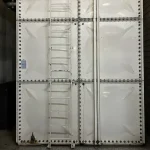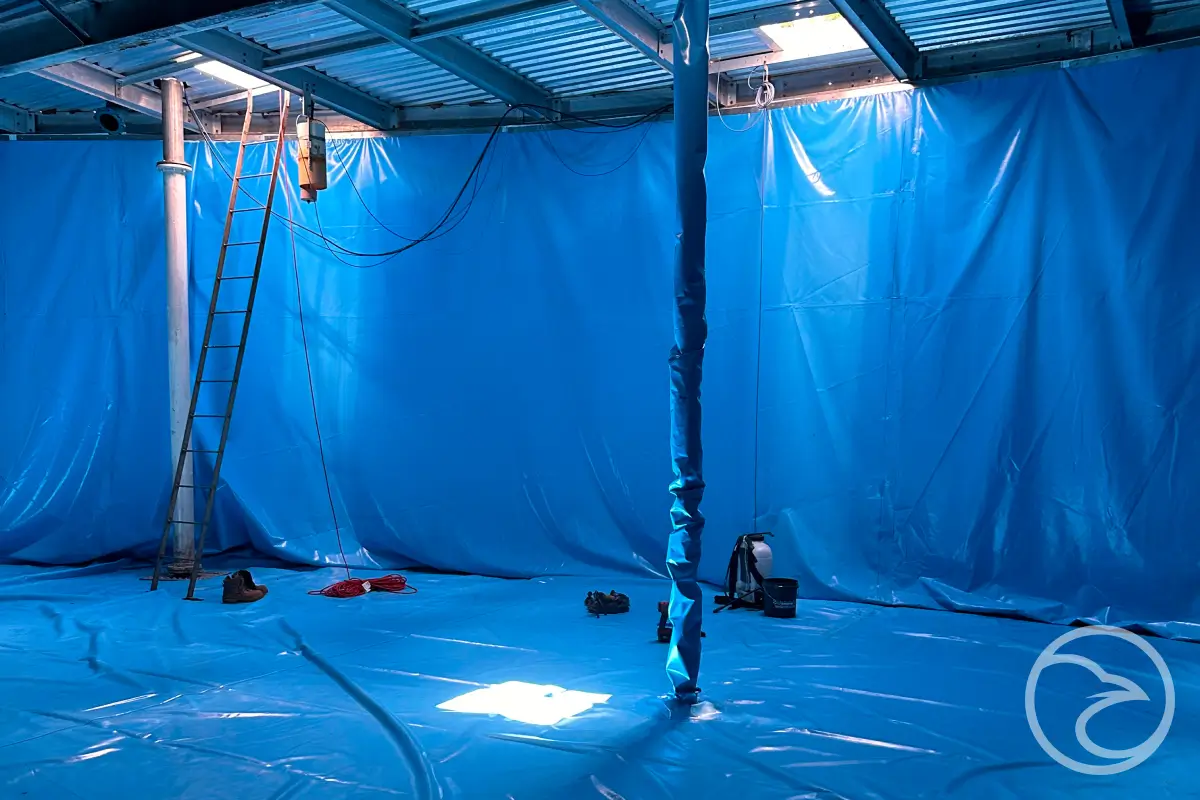
Tank liners provide an important barrier between stored water and the tank structure. They help maintain containment and protect the underlying tank from direct contact with stored liquids.
Liners are used across many water storage applications. These include potable water, fire water, commercial, industrial, agricultural, and other storage systems.
However, a tank liner is not maintenance-free. Its condition can change because of ageing, water chemistry, movement, incorrect installation, cleaning practices, or problems with the supporting tank.
Small defects can begin around seams, fittings, corners, or other high-stress areas. If these problems remain unnoticed, they can eventually result in leakage or more extensive liner damage.
Tank liner maintenance helps identify these changes and manage them before they become larger problems.
This guide explains what liner maintenance involves, common problems, when maintenance is needed, and what happens when defects are found. It also covers liner cleaning, inspection, repair, and ways to support a longer service life.
Why are Tank Liners Important?
A tank liner creates a watertight internal barrier. Depending on the tank design, the liner may separate stored water from steel, concrete, or another supporting structure.
This barrier performs several important functions.
It can:
- provide water containment;
- separate water from the tank structure;
- protect underlying surfaces;
- support suitable water storage;
- help manage existing tank conditions;
- extend the usable life of some tanks.
A liner can also provide a practical solution when an existing tank structure remains serviceable but its original internal containment requires improvement. However, liner performance depends on more than the liner material itself.
Installation, tank condition, water characteristics, fittings, maintenance, and operating conditions all influence long-term performance.
Visit our tank liners page to explore liner solutions for protecting and restoring different water storage tanks.
What Affects Tank Liner Performance?
Two liners made from the same material can have very different service lives. The difference often comes from operating conditions.
Important factors include:
- liner material;
- material thickness;
- water chemistry;
- stored liquid;
- temperature;
- UV exposure;
- tank movement;
- installation quality;
- surface preparation;
- tank geometry;
- fittings and penetrations;
- cleaning methods;
- maintenance frequency.
The condition of the supporting tank is equally important. A liner installed inside a tank with sharp edges, significant corrosion, or structural movement may experience additional stress.
Poor installation can also create folds or tension points. Maintenance should therefore consider both the liner and the structure supporting it.
What is Tank Liner Maintenance?
Tank liner maintenance is the ongoing process of monitoring, cleaning, inspecting, and maintaining a tank liner throughout its service life. It is not simply repairing the liner after a leak develops.
A preventative maintenance approach aims to identify changes before water containment is significantly affected.
Maintenance can involve:
- visual condition checks;
- seam assessment;
- fitting checks;
- monitoring for leaks;
- cleaning;
- inspecting high-stress areas;
- checking penetrations;
- assessing previous repairs;
- documenting changes;
- planning corrective work.
The exact maintenance requirements depend on liner type, tank application, water conditions, and inspection findings. A potable water liner may also have different requirements from a liner used for another stored liquid.
Why does Tank Liner Maintenance Matter?
Liner damage can begin locally. A small defect around a penetration may initially have little visible effect. However, movement or continued stress can make that defect larger.
Regular maintenance can help identify:
- early wear;
- seam deterioration;
- punctures;
- tears;
- movement;
- damaged fittings;
- unusual deformation;
- previous repair deterioration.
Early identification usually provides more options. A small repairable defect is very different from widespread liner deterioration. Maintenance can therefore help facility owners plan work rather than waiting for a major leak.
A broader water tank maintenance program can help manage both liner condition and the structural components supporting it.
Common Tank Liner Problems
Tank liners can develop several types of problems during service. The exact failure mechanism depends on the liner material and operating conditions.
Common issues include:
- punctures;
- tears;
- seam separation;
- abrasion;
- folds;
- wrinkles;
- stretching;
- material ageing;
- damage around fittings;
- leaks;
- chemical deterioration;
- installation-related damage.
Some problems originate with the liner. Others begin elsewhere in the tank. For example, corrosion can create a rough or sharp surface behind the liner. Structural movement can also place stress on seams and fittings.
Finding the cause is therefore an important part of maintenance.
Punctures and Tears
Physical damage is one of the most obvious liner problems. A puncture can result from contact with a sharp surface, equipment, debris, or damaged tank component. Tears may develop from an existing puncture or stressed area.
The severity depends on:
- location;
- size;
- liner material;
- surrounding condition;
- whether the defect is progressing.
Small localised damage may sometimes be repairable. Larger or repeated tears may indicate an underlying problem requiring further investigation.
Seam Problems
Many fabricated tank liners contain joined sections. These seams are critical to water containment.
Problems can develop because of:
- ageing;
- installation stress;
- movement;
- poor original joining;
- mechanical damage;
- unsuitable operating conditions.
A seam defect may initially produce a slow leak. The exact point of external water appearance may differ from the seam defect because water can travel behind the liner.
This can make leak investigation more complex.
Damage Around Tank Fittings
Fittings and penetrations deserve particular attention.
The liner must transition around:
- inlets;
- outlets;
- drains;
- overflows;
- other penetrations.
These areas can experience concentrated stresses. Problems may develop because of movement, poor sealing, mechanical loads, or incorrect fitting installation. Pipework can also contribute.
Unsupported pipes can transfer forces into the fitting and surrounding liner. Recurring problems around the same penetration should therefore be investigated beyond the visible liner damage.
Liner damage can be one source of water loss. Our water tank leakage guide explains other common causes and warning signs.
Wrinkles, Folds and Liner Movement
A liner does not always remain perfectly flat throughout service. Some movement may occur depending on design and installation. However, significant changes should be assessed.
Excessive folds or movement can potentially create:
- stress concentrations;
- abrasion points;
- difficult cleaning areas;
- localised wear;
- stress around fittings.
The cause should be understood before attempting to reposition the liner. Tank movement or installation conditions may be contributing.
Abrasion and Wear
Repeated contact can gradually wear liner material.
This may occur where the liner moves against:
- rough surfaces;
- sharp edges;
- corroded components;
- fittings;
- structural elements.
The supporting surface is therefore important. Repairing the liner without correcting the source of abrasion may allow the same problem to return.
Maintenance should look beyond the visible worn area.
What Does Tank Liner Maintenance Include?
Maintenance should be appropriate for the liner and tank application. A typical program can include several activities.
Visual Checks
Accessible liner areas can be observed for visible changes.
Look for:
- tears;
- unusual folds;
- discoloration;
- damaged seams;
- deformation;
- visible wear;
- damaged fittings.
Photographs can provide useful reference points for future comparison.
Leak Monitoring
Unexpected water loss may indicate liner damage. However, not every water-level change is caused by leakage.
Normal usage, evaporation, overflow, and system operation should also be considered. Persistent unexplained loss deserves investigation.
Seam Checks
Seams should be checked for visible separation, deterioration, or unusual movement. Areas previously repaired should receive additional attention.
Penetration and Fitting Checks
Inspect areas where the liner connects with tank fittings. Look for movement, damage, leakage, or stress around these points.
Cleaning
Sediment and deposits should be managed when appropriate. Cleaning can also improve visibility during liner inspection. Where sediment has accumulated, tank cleaning services can help expose liner surfaces for more effective inspection and maintenance.
Documentation
Record findings, photographs, repairs, and changes. A maintenance history helps identify recurring or progressing problems.
What can be Found During Liner Maintenance?
Maintenance can reveal problems before they produce obvious external leakage.
Typical findings may include:
- small punctures;
- seam deterioration;
- abrasion;
- early tears;
- liner movement;
- damage around fittings;
- accumulated sediment;
- previous repair deterioration;
- supporting structure problems.
Not every finding requires immediate replacement. The response should reflect severity and cause. Some defects may only require monitoring.
Others may require local repair or more detailed assessment.
The Connection Between Tank Liners and the Supporting Tank
A liner should never be assessed completely separately from the tank. The supporting structure can directly influence liner performance. For example, an ageing steel tank may develop corrosion behind the liner.
If the corrosion creates rough edges, it can damage the liner. Structural deformation can also change liner loading.
Potential underlying problems include:
- corrosion;
- damaged panels;
- sharp edges;
- loose components;
- foundation movement;
- damaged fasteners;
- structural deformation.
When liner damage repeatedly appears in the same area, the tank behind it should be investigated. Replacing or patching the liner without addressing the underlying defect may provide only a temporary solution.
When is Tank Liner Maintenance Needed?
There is no single interval suitable for every tank liner. Maintenance frequency depends on the tank and operating environment.
Factors include:
- liner age;
- liner material;
- tank application;
- water quality;
- temperature;
- previous damage;
- inspection findings;
- cleaning frequency;
- tank condition;
- manufacturer recommendations.
Condition should also influence the schedule. A liner with a history of recurring repairs may require closer monitoring. An ageing liner can also justify more frequent assessment.
Maintenance should not depend only on visible leakage. By the time water appears outside the tank, the defect may already have been developing for some time.
Signs a Tank Liner Needs Attention
Facility owners can watch for several warning signs.
These include:
- unexplained water loss;
- visible leakage;
- damaged seams;
- tears;
- punctures;
- unusual folds;
- liner movement;
- damaged fittings;
- visible wear;
- recurring repairs;
- unusual changes in liner appearance.
External signs can also provide clues. Water appearing around the tank base may originate from a liner defect. However, it could also come from pipework, rainfall, condensation, or another source.
The cause should be confirmed rather than assumed.
Tank Liner Cleaning
Cleaning is an important part of liner maintenance. Sediment, sludge, debris, and other material can accumulate on the liner surface. The amount depends on water source and tank application.
Cleaning can help:
- remove accumulated material;
- improve internal condition;
- expose liner surfaces;
- make defects easier to see;
- support detailed inspection.
However, cleaning methods must be appropriate for the liner material. Aggressive equipment or unsuitable chemicals can damage some liners. Sharp tools should not be used against flexible liner surfaces.
The objective is to remove unwanted material without creating new damage.
Why Cleaning and Inspection Work Together
Cleaning and inspection perform different functions. Cleaning removes sediment and deposits. Inspection evaluates condition.
The two activities can complement each other. Sediment may conceal small punctures, abrasion, seams, or other areas of interest. Once surfaces are clean, the liner can be assessed more effectively.
This is particularly useful around:
- tank floors;
- seams;
- corners;
- fittings;
- previous repairs.
Cleaning can therefore create a useful opportunity for condition assessment.
Tank Liner Inspection
A tank liner inspection provides a more detailed assessment than routine observation. The inspection can focus specifically on the condition of the containment barrier.
Depending on access and liner type, inspectors may examine:
- seams;
- walls;
- floors;
- corners;
- penetrations;
- fittings;
- high-stress areas;
- previous repairs;
- visible liner movement.
The surrounding tank condition should also be considered. An inspector may identify a liner problem that actually originates from corrosion or structural movement behind it. This is why liner inspection and broader tank inspection are closely connected.
Can a Liner be Inspected Without Draining the Tank?
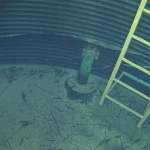
In some situations, yes. Remote inspection methods can allow internal tank conditions to be observed while the tank remains filled. This may be useful where draining the tank creates operational disruption.
Remote systems can help identify visible:
- liner damage;
- unusual folds;
- sediment;
- internal component condition;
- fitting problems.
However, not every defect can be fully assessed underwater. Detailed testing or repair may still require draining or lowering the water level.
The inspection method should be selected according to the suspected problem.
What Happens after a Liner Problem is Found?
The next step depends on severity. A useful maintenance process is:
Identify → assess → determine cause → repair or monitor → reinspect.
A small stable area may only require monitoring. A local puncture may be suitable for repair. Widespread deterioration may require liner replacement.
The underlying tank condition should also be considered. If corrosion or structural movement caused the liner damage, that problem should be addressed before the liner is repaired.
Otherwise, the defect may return.
Can Tank Liners be Repaired?
Yes, many liner defects can be repaired.
Repair suitability depends on:
- liner material;
- liner age;
- damage location;
- defect size;
- surrounding condition;
- accessibility;
- cause of damage.
Possible repair methods can involve compatible patches or material-specific joining techniques. The repair material must be compatible with the existing liner and stored liquid. For potable water applications, relevant suitability requirements should also be considered.
Repairs should not simply cover an unexplained defect. The reason for the damage should be investigated first.
When is Liner Replacement Better than Repair?
Not every liner remains a good candidate for repeated repair. Replacement may become more appropriate when deterioration is widespread.
Possible indicators include:
- multiple leaks;
- repeated seam failures;
- widespread material deterioration;
- extensive abrasion;
- numerous previous patches;
- ageing material;
- widespread loss of flexibility;
- damage across multiple areas.
The condition of the supporting tank also matters. Installing a new liner inside a structurally unsuitable tank will not solve underlying tank problems.
The structure should therefore be assessed before significant relining work.
Repair vs Replacement
The decision should be condition-based. A relatively new liner with one localised puncture may be a strong repair candidate. An ageing liner with multiple seam problems may not be.
Consider:
- current condition;
- number of defects;
- repair history;
- liner age;
- expected remaining life;
- tank condition;
- operational requirements;
- cost of repeated downtime.
Repeated repairs can become a sign that broader replacement should be considered. The lowest immediate repair cost is not always the lowest lifecycle cost.
How Long do Tank Liners Last?
There is no universal service life for every tank liner. Lifespan varies significantly according to material and operating conditions.
Important influences include:
- liner material;
- thickness;
- stored liquid;
- temperature;
- UV exposure;
- installation;
- tank condition;
- cleaning practices;
- mechanical stress;
- maintenance.
Manufacturer specifications can provide expected performance information for specific products. However, actual condition should guide maintenance and replacement decisions.
A liner should not automatically be replaced because it reaches a particular age if its condition remains suitable. Likewise, a younger liner should not be assumed to be healthy if it has experienced damage.
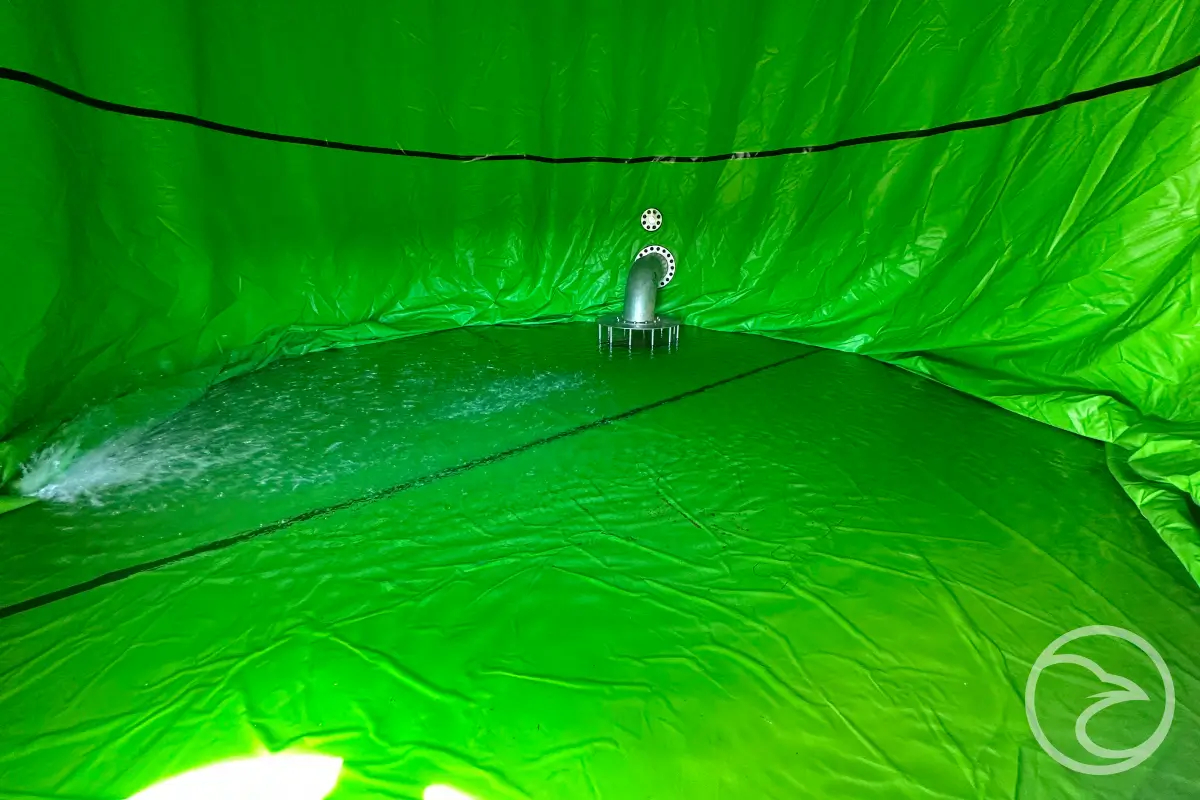
How to Extend Tank Liner Service Life
Good maintenance cannot stop ageing completely. However, it can help reduce avoidable damage.
Useful practices include:
- inspect liners regularly;
- use suitable cleaning methods;
- avoid sharp cleaning equipment;
- monitor seams;
- check fittings;
- address leaks early;
- maintain the supporting tank;
- correct structural problems;
- monitor previous repairs;
- keep maintenance records.
Installation quality also has a major influence. Correct fitting helps reduce unnecessary folds, tension, and stress around penetrations.
The supporting surface should also be prepared appropriately before liner installation.
Why Maintenance Records Matter
Liner condition is easier to understand when there is a history. A single photograph shows today’s condition.
Several years of photographs can show whether a problem is changing.
Records can include:
- installation date;
- liner material;
- inspection dates;
- cleaning history;
- leak locations;
- repairs;
- photographs;
- fitting replacements;
- recommendations.
These records help answer important questions.
Preventative vs Reactive Liner Maintenance
Reactive maintenance begins after a leak or obvious failure appears. The facility then needs to identify the source and arrange repair. Preventative maintenance aims to find developing issues earlier.
It can involve scheduled inspection, appropriate cleaning, leak monitoring, and condition records. Preventative maintenance cannot eliminate every unexpected failure. However, it provides more information about liner condition.
This can make repairs and replacement easier to plan. It may also reduce the likelihood of discovering major liner deterioration during an operationally inconvenient period.
Can Facility Owners Check Tank Liners Themselves?
Basic external monitoring can be useful.
Facility personnel can watch for:
- unexpected water loss;
- external leakage;
- recurring damp areas;
- changes around fittings;
- previous repair problems.
Internal assessment is different. Tank entry can involve significant safety risks, including confined-space hazards. Personnel should not enter a tank simply to perform an informal liner check.
Professional inspection methods should be considered when internal condition needs to be assessed.
Tank Liner Maintenance Checklist
A simple checklist can help facility owners monitor liner condition.
Consider:
- Is there unexplained water loss?
- Are any external leaks visible?
- Has the liner been inspected recently?
- Are seams in suitable condition?
- Are fittings and penetrations secure?
- Is there visible liner movement?
- Are there folds or abrasion areas?
- Is sediment accumulating?
- Have previous repairs remained effective?
- Is the supporting tank deteriorating?
- Has appropriate cleaning been completed?
- Are findings documented?
- Are recommended repairs scheduled?
The checklist should be adapted to the specific tank and liner system.
Final Thoughts
Tank liners provide an important containment barrier inside many water storage systems. However, their performance depends on more than liner material alone. Installation quality, water conditions, fittings, cleaning practices, tank movement, and the condition of the supporting structure all influence service life.
Tank liner maintenance helps facility owners monitor these factors over time. Routine checks can identify leakage and other external warning signs. Cleaning can expose liner surfaces that were previously hidden by sediment. Detailed liner inspection can then identify punctures, seam deterioration, abrasion, movement, and damage around fittings.
When a problem is found, the next step should be based on its cause and severity. Many localised defects can be repaired. Widespread deterioration, repeated leaks, or extensive material ageing may make liner replacement more practical. The supporting tank should also be assessed.
A new patch or liner cannot permanently solve a problem caused by severe corrosion, sharp surfaces, or structural movement behind it. Good maintenance therefore treats the liner and tank as one connected system.
Regular inspection, appropriate cleaning, early repair, and clear maintenance records can help reduce unexpected problems and support longer, more reliable liner performance.