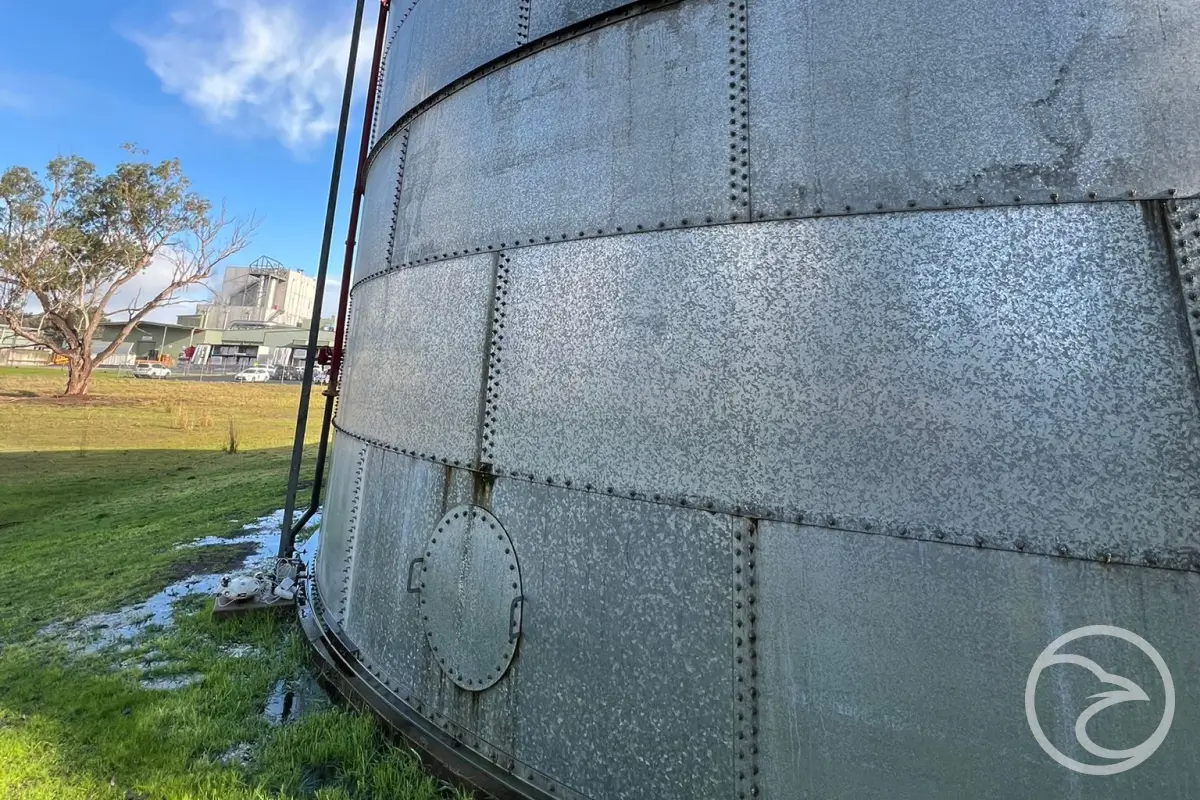
Water storage tanks rely on stable foundations to support their weight and maintain structural integrity. When the ground beneath a tank moves, the entire structure can experience additional stress.
Water tank foundation settlement can develop gradually, making early warning signs difficult to recognise. Small changes in elevation may affect tank walls, joints, pipe connections, and supporting components.
In some cases, settlement causes visible deformation or recurring leaks. In others, structural movement remains unnoticed until a detailed inspection identifies the problem.
Understanding foundation settlement helps facility managers recognise potential risks before significant damage develops. This guide explains common causes, warning signs, inspection methods, and practical approaches to managing water tank foundation problems.
What is Water Tank Foundation Settlement?
Water tank foundation settlement occurs when the ground or supporting foundation moves downward under the tank’s weight. Some settlement may occur naturally as soil compresses after construction. However, excessive or uneven movement can affect the tank’s structural performance.
Large commercial and industrial water tanks place substantial loads on their foundations. These loads increase when tanks reach their maximum operating capacity.
The foundation must distribute these forces safely across the supporting ground. When soil conditions change or support becomes uneven, the foundation may no longer distribute loads as intended.
This can cause:
-
Uneven tank alignment
-
Distortion of tank walls or panels
-
Increased stress around joints
-
Damage to pipe connections
-
Localised structural deformation
-
Cracking or movement around foundation edges
-
Recurring water leakage
The severity depends on the amount, location, and progression of settlement. Not every foundation movement indicates immediate structural failure. However, unexpected movement should be investigated before additional damage develops.
What Causes Water Tank Foundations to Settle?
Several environmental, construction, and operational factors can contribute to water tank foundation settlement. Understanding the underlying cause is essential when determining appropriate corrective measures.
1. Poor Soil Compaction
Improperly compacted soil may compress further after a water tank enters service. This is particularly concerning when foundations are constructed over recently placed fill.
As the soil compresses, the foundation may move downward. Uneven compaction can create different settlement rates across the tank footprint.
2. Changes in Groundwater Conditions
Groundwater movement can influence soil strength and foundation stability. Changes in moisture conditions may cause certain soils to shrink, swell, or lose supporting capacity.
Poor drainage can also contribute to erosion or softening beneath foundation edges. These conditions may develop gradually or follow significant rainfall events.
3. Inadequate Foundation Design
Tank foundations must accommodate the weight and loading characteristics of the complete storage system. An unsuitable foundation design may produce excessive settlement or uneven load distribution.
Potential problems include insufficient ground preparation, inadequate bearing capacity, or inappropriate foundation geometry. Design requirements depend on tank dimensions, stored liquid, soil conditions, and applicable engineering standards.
4. Soil Erosion and Washout
Water movement around foundations can remove supporting soil. Leaks, damaged drainage systems, and concentrated stormwater runoff may contribute to localised erosion.
Over time, this can create unsupported areas beneath foundation edges or structural components.
5. Repeated Filling and Emptying
Water tanks experience changing loads during normal operation. Repeated filling and emptying can influence soil and foundation behaviour, particularly where existing ground conditions are unsuitable.
These load changes may also expose weaknesses in foundations already experiencing movement.
6. Nearby Construction Activities
Excavation, vibration, and changes to surrounding ground levels can affect nearby tank foundations. Construction activities may alter soil support or drainage conditions.
Foundation movement following nearby works should receive appropriate engineering assessment.
Early Warning Signs of Water Tank Foundation Settlement
Foundation settlement does not always produce obvious damage immediately. Regular visual inspections can help identify changes before they become more serious.
Common warning signs include:
-
Uneven foundation levels or visible changes in tank alignment
-
Cracks in concrete foundations or surrounding surfaces
-
Gaps beneath foundation edges or supporting components
-
Bulging, bowing, or deformation of tank walls
-
Recurring leaks around panel joints or connections
-
Distorted inlet, outlet, or overflow pipework
-
Water collecting around the foundation
-
Changes in the position of ladders or access structures
These symptoms do not automatically confirm foundation settlement. Similar problems can result from corrosion, damaged components, poor installation, or operational stresses.
A structured inspection helps distinguish foundation movement from other potential causes.
Cracks Around the Foundation
Cracks may develop when concrete experiences movement, shrinkage, or excessive loading. Their location, width, direction, and progression provide useful information during assessment.
A small surface crack does not necessarily indicate structural instability. However, widening cracks or movement between foundation sections deserve closer investigation.
Uneven Tank Walls
Unexpected wall deformation may indicate changes in load distribution. For sectional tanks, uneven support can increase stress around individual panels and connections.
Visible movement should be assessed alongside foundation levels and other structural observations.
Repeated Joint Leakage
Recurring leaks sometimes indicate problems beyond damaged seals. Foundation movement can distort tank geometry and increase stress around joints.
Replacing a gasket may temporarily stop leakage without addressing the underlying movement. Foundation movement can damage tank joints and seals, making water tank leakage a recurring problem that requires further investigation.
How Foundation Settlement Affects Water Tank Structures
Foundation movement can influence several components of a water storage system. The effects vary according to tank construction, foundation type, and the severity of movement.
Uneven Load Distribution
A stable foundation supports the tank according to its intended design. Differential settlement can change how forces move through the structure.
Some components may experience additional loading while others lose adequate support.
Tank Wall Deformation
Uneven support may contribute to distortion in tank walls or panels. This is particularly important for sectional tanks with multiple interconnected components.
Deformation can affect panel alignment, seals, and structural connections.
Joint and Seal Damage
Bolted and sectional water tanks rely on properly aligned joints. Foundation movement can place additional stress on these connections.
Over time, this may contribute to gasket deterioration, joint movement, or leakage.
Pipework Stress
Inlet, outlet, and overflow connections can be affected when a tank moves relative to surrounding infrastructure. Rigid pipework may transfer unwanted forces into tank walls or fittings.
Visible distortion, cracking, or recurring leakage around connections should be investigated.
Reduced Operational Reliability
Foundation problems can affect the reliability of critical water storage infrastructure. For fire water tanks, significant defects may compromise the availability or integrity of the stored water supply.
This makes timely assessment particularly important for essential storage systems.
Differential Settlement vs Uniform Settlement
Not all foundation settlement affects tanks in the same way. Two important settlement patterns are uniform settlement and differential settlement.
| Feature | Uniform settlement | Differential settlement |
|---|---|---|
| Movement pattern | Foundation moves downward relatively evenly | Different foundation areas move by different amounts |
| Tank alignment | May remain relatively level | May become tilted or distorted |
| Structural stress | Depends on movement and connected services | Can introduce additional stresses |
| Joint damage | Less directly associated with distortion | Greater potential for joint misalignment |
| Pipe connections | May experience relative movement | May experience movement and distortion |
| Inspection priority | Assess total movement and service connections | Assess uneven movement and structural effects |
Uniform Settlement
Uniform settlement occurs when the foundation moves downward at a relatively consistent rate. The tank may remain level despite the movement.
However, connected pipework and surrounding structures can still experience stress. The amount and progression of settlement remain important.
Differential Settlement
Differential settlement occurs when different parts of the foundation move by different amounts. This can cause tank distortion, uneven loading, and misalignment.
Differential settlement is particularly concerning when movement affects structural connections or supporting components. Even relatively small differences may matter for certain tank designs.
The acceptable limits depend on the specific structure and engineering requirements.
How to Inspect a Water Tank Foundation for Settlement
A water tank foundation inspection should examine both the supporting structure and the tank itself. The inspection method depends on the foundation type, site conditions, and visible symptoms.
Some observations can be made during routine maintenance. More detailed measurements and structural assessments require appropriately qualified personnel.
1. Review Existing Documentation
Inspectors should review available construction drawings, foundation details, and previous inspection records.
Relevant information may include:
-
Foundation design and dimensions
-
Geotechnical investigation reports
-
Tank installation records
-
Previous level surveys
-
Historical repairs
-
Reported leakage or deformation
-
Changes in surrounding ground conditions
These records help establish whether observed movement is new or longstanding.
2. Conduct an External Visual Inspection
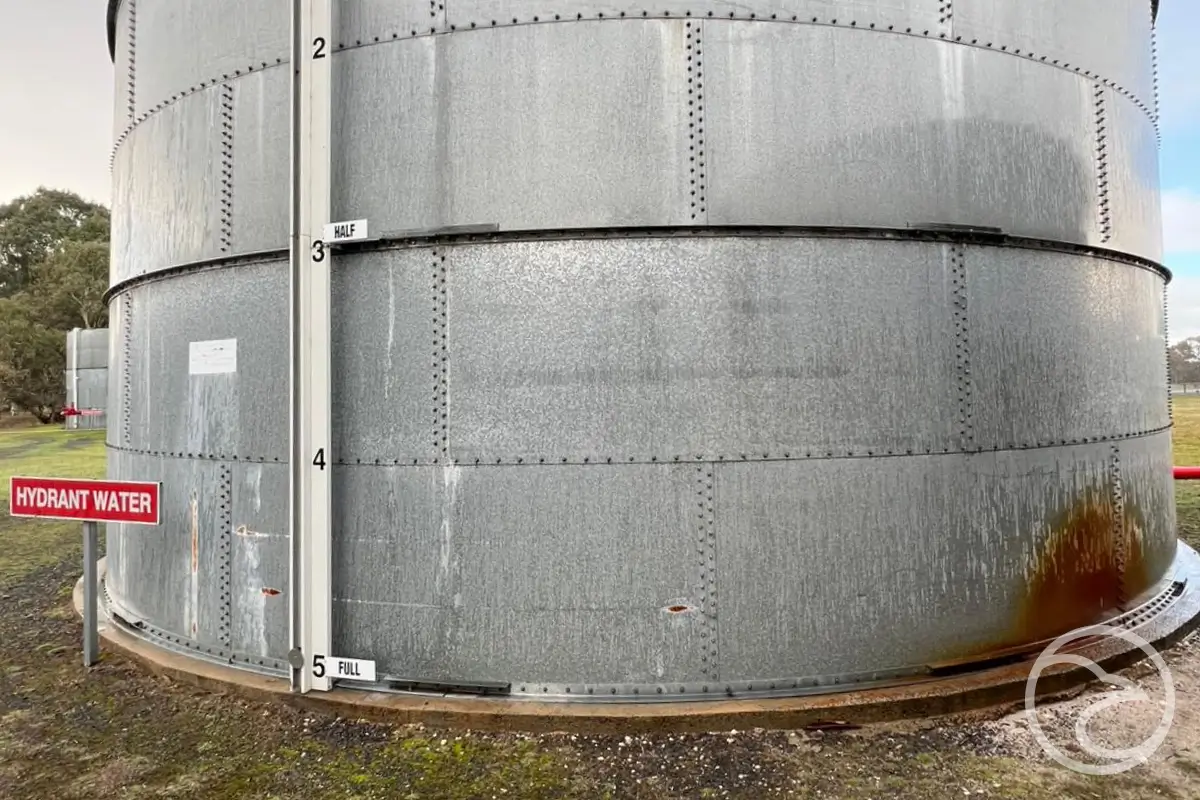
The inspection begins with a systematic examination of accessible foundation areas. Inspectors look for cracking, erosion, standing water, displaced components, and visible settlement.
They also examine the surrounding ground for signs of movement. Foundation edges and drainage areas deserve particular attention.
3. Check Tank Alignment
Changes in tank alignment can indicate possible foundation movement. Inspectors may examine wall verticality, panel alignment, and the position of structural components.
Visible deformation should be recorded with photographs and measurements where practical. Tank alignment alone cannot establish the exact cause of settlement.
4. Measure Foundation Levels
Level measurements can help identify uneven settlement across the foundation. Appropriate surveying equipment may be used to compare selected reference points.
Measurements should be taken consistently to support future comparisons. Repeated surveys can help determine whether movement is continuing.
5. Inspect Joints and Connections
Tank joints and pipe connections should be examined for signs of abnormal movement.
Areas of concern include:
-
Misaligned panels
-
Damaged or displaced seals
-
Recurring joint leakage
-
Distorted fittings
-
Cracking around penetrations
-
Unsupported or strained pipework
These observations help identify potential structural consequences of settlement.
6. Assess Drainage and Ground Conditions
Poor drainage can contribute to foundation deterioration. Inspectors should examine stormwater flow, surrounding ground levels, and evidence of erosion.
Persistent moisture around the foundation may indicate drainage problems requiring further investigation.
7. Document Findings
Inspection findings should be recorded clearly and consistently. Reports may include photographs, measured levels, defect locations, observed changes, and recommended actions.
Where significant movement is suspected, the report should identify the need for engineering assessment.
Visual Inspection vs Engineering Assessment
Routine visual inspections and detailed engineering assessments serve different purposes.
| Inspection approach | Main purpose | Typical activities |
|---|---|---|
| Routine visual inspection | Identify visible warning signs | Check cracks, drainage, alignment, leakage, and deformation |
| Detailed condition inspection | Document defects and their extent | Record measurements, photographs, and structural observations |
| Level survey | Identify and monitor movement | Measure foundation elevations against reference points |
| Geotechnical investigation | Assess ground-related causes | Investigate soil conditions and foundation support |
| Structural engineering assessment | Evaluate structural implications | Assess loads, deformation, stability, and corrective options |
Visual inspections can identify potential problems. However, they cannot always establish soil conditions or confirm structural safety.
Engineering assessment may be necessary when significant movement, instability, or progressive damage is suspected.
When does Foundation Settlement Require Professional Assessment?
Not every minor foundation defect requires extensive investigation. However, certain conditions justify prompt professional assessment.
These include:
-
Increasing foundation cracks
-
Measurable differential settlement
-
Significant tank tilting
-
Progressive wall deformation
-
Repeated structural joint failures
-
Sudden changes in tank alignment
-
Evidence of soil washout
-
Movement affecting critical pipe connections
-
Suspected loss of foundation support
A professional assessment should consider both the foundation and the complete tank system. There is no single settlement limit suitable for every water tank.
Acceptable movement depends on foundation design, tank construction, loading conditions, and applicable engineering requirements. Facility managers should avoid relying on arbitrary settlement measurements when evaluating structural safety.
Where immediate structural instability is suspected, tank operation should be reviewed by qualified personnel.
Can Water Tank Foundation Settlement be Repaired?
Foundation settlement may be repairable, depending on its cause and severity. The appropriate solution requires an understanding of the underlying ground and structural conditions.
Repairing visible damage without addressing ongoing settlement may result in recurring problems.
Improving Site Drainage
Where excess water contributes to ground deterioration, drainage improvements may help reduce further damage. This can involve redirecting runoff, repairing drainage systems, or addressing persistent water accumulation.
Drainage improvements alone may not correct existing structural movement.
Ground Stabilisation
Some settlement problems may require ground improvement or stabilisation. The selected method depends on soil conditions, foundation design, and engineering assessment.
Specialist geotechnical advice may be necessary.
Foundation Repair or Reconstruction
Significant foundation damage may require structural repairs or reconstruction. The scope depends on the tank’s condition, foundation type, and extent of movement.
Such work requires appropriate engineering design and planning.
Tank Structural Repairs
Settlement can also damage tank components. Repairs may involve joints, seals, panels, fittings, or supporting structures. These repairs should address the structural consequences of settlement rather than isolated symptoms alone.
Professional water tank repairs may address damaged joints, panels, and connections after the underlying foundation problems have been assessed.
Tank Replacement
In severe cases, replacement may be more practical than extensive structural rehabilitation. This decision should consider tank condition, repair feasibility, operational requirements, and long-term reliability.
How to Reduce the Risk of Water Tank Foundation Settlement
Preventing foundation problems begins with appropriate design and construction. However, ongoing monitoring remains important throughout the tank’s service life.
Ensure Appropriate Ground Preparation
Foundation construction should account for soil conditions and anticipated loads. Suitable compaction and ground preparation help reduce the risk of excessive settlement.
Maintain Effective Drainage
Water should not accumulate unnecessarily around tank foundations. Regular checks can identify blocked drains, erosion, and changes in surrounding ground levels.
Monitor Visible Changes
Foundation cracks, tank alignment, and surrounding ground conditions should be monitored over time. Photographs and consistent inspection records can help identify progressive movement.
Investigate Recurring Leaks
Repeated leakage may indicate structural movement rather than an isolated sealing problem. Inspectors should consider foundation condition when leaks return after repairs.
Arrange Periodic Tank Inspections
Routine inspections help identify deterioration affecting the complete storage system. Foundation condition should be considered alongside tank walls, joints, supports, and connections.
Inspection frequency should reflect tank condition, operational requirements, and applicable obligations.
Foundation Settlement in Fire Water Tanks
Fire water tanks support critical fire protection systems. Their foundations must provide reliable support under the intended operating conditions. Foundation movement can affect structural integrity, watertightness, and connected fire protection infrastructure.
This makes settlement assessment particularly important when visible deformation or recurring leakage occurs. Australian fire water tank inspection and maintenance requirements may involve AS 1851 and other applicable standards. However, these requirements should not be interpreted as universal foundation settlement tolerances.
Structural acceptability must be assessed against the relevant tank design and engineering criteria. Facility managers should also consider how inspection or repair activities could affect fire protection availability.
Any required impairment management should follow applicable site procedures and fire protection requirements.
Final Considerations
Water tank foundation settlement can affect structural alignment, joint integrity, pipe connections, and long-term operational reliability. Early warning signs are not always obvious, particularly when movement develops gradually.
Regular inspections, effective drainage, and consistent documentation can help identify developing problems. When significant or progressive movement occurs, professional engineering assessment is essential.
Understanding the relationship between foundation conditions and tank performance supports safer maintenance and better long-term asset management.