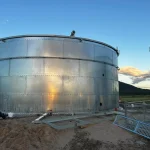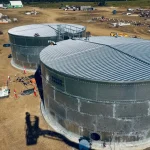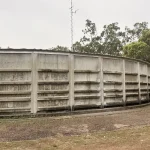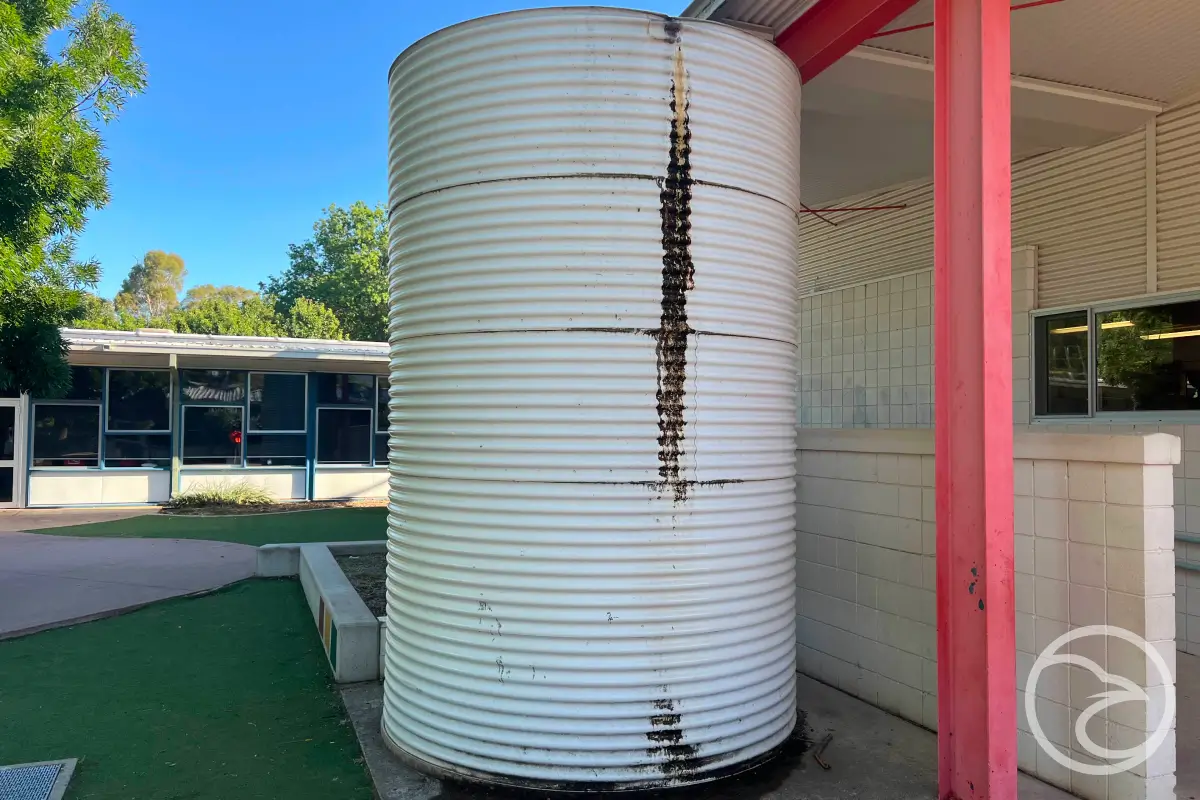
Water tank leakage can develop gradually, making early detection difficult for facility managers and maintenance teams. Small leaks may initially appear harmless, but continued water loss can affect structural components, foundations, and surrounding infrastructure.
Commercial and industrial water tanks are exposed to constant hydrostatic pressure, environmental conditions, and operational demands. Over time, these factors can contribute to joint deterioration, corrosion, liner damage, and structural movement.
Identifying the source of leakage is essential before selecting a repair method. A leaking tank does not always require replacement, but surface repairs may not resolve underlying structural problems.
This guide explains common causes, early warning signs, inspection methods, and repair options for leaking water tanks.
What Causes Water Tank Leakage?
Water tank leakage can result from material deterioration, installation defects, structural movement, or inadequate maintenance. The cause often depends on the tank’s construction, operating conditions, and age.
1. Damaged Joints and Seals
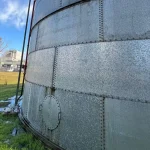
Sectional water tanks rely on sealed connections between individual panels. These joints must withstand continuous water pressure and movement caused by temperature changes.
Over time, seals may deteriorate, lose flexibility, or become displaced. Loose fasteners and panel movement can also compromise joint integrity.
Common problems include:
-
Deteriorated rubber gaskets or sealants
-
Loose or corroded bolts
-
Misaligned tank panels
-
Failed connections between wall and floor panels
-
Repeated movement around existing joints
Joint leakage is particularly relevant to sectional steel, GRP, and other bolted tank systems.
2. Corrosion and Material Deterioration
Corrosion can weaken steel tank components and eventually create openings through which water escapes. The risk depends on protective coatings, water chemistry, environmental exposure, and maintenance history.
Areas requiring attention include:
-
Lower wall panels
-
Floor-to-wall connections
-
Bolted joints and fasteners
-
Areas beneath damaged coatings
-
Internal surfaces exposed to persistent moisture
Corrosion-related leakage may indicate broader material deterioration beyond the visible opening.
3. Cracks and Structural Damage
Cracks can develop in concrete tanks, while GRP and steel tanks may experience different forms of structural damage. Possible contributing factors include excessive loads, impact damage, manufacturing defects, and structural movement.
Not every crack causes immediate leakage. However, cracks that penetrate containment surfaces can allow water to escape. A professional inspection helps determine whether damage is superficial or structurally significant.
4. Water Tank Foundation Settlement
Foundation movement can place additional stress on tank walls, floors, joints, and connected pipework. Uneven settlement is particularly concerning because it can distort the tank’s geometry and load distribution.
Possible consequences include:
-
Opening of panel joints
-
Deformation of tank walls
-
Increased stress around pipe penetrations
-
Damage to floor connections
-
Recurring leakage after previous repairs
Our guide to water tank foundation settlement explains how ground movement affects tank structures and inspection requirements.
5. Damaged Tank Liners
Tank liners provide an additional containment barrier in many water storage systems. Damage can develop through mechanical abrasion, poor installation, incompatible materials, or deterioration over time.
Common liner problems include punctures, failed seams, displaced sections, and damage around penetrations. A liner defect does not necessarily indicate structural tank failure. However, the underlying tank condition must be assessed before repairs.
6. Pipe Connections and Penetrations
Leaks may originate from inlet, outlet, overflow, or drainage connections rather than tank walls. Movement, deteriorated seals, and poorly supported pipework can compromise these connections.
External pipe leakage can also resemble tank leakage, making accurate diagnosis important.
Early Warning Signs of a Leaking Water Tank
Not all leaks are immediately visible. Some develop beneath the tank or behind structural components. Early identification helps reduce water loss and prevent damage from progressing.
Unexplained Water Level Reduction
Unexpected water loss may indicate leakage, particularly when consumption and operational discharge remain unchanged. However, water levels can also change through normal use, evaporation, overflow, or equipment operation.
Inspectors should consider these factors before concluding that the tank is leaking.
Persistent Moisture Around the Tank
Wet ground, standing water, or damp surfaces near the tank may indicate escaping water. Moisture around the foundation deserves particular attention when it persists during dry weather.
Possible sources include tank leakage, pipework defects, drainage problems, and groundwater.
Rust Stains and Surface Deterioration
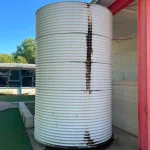
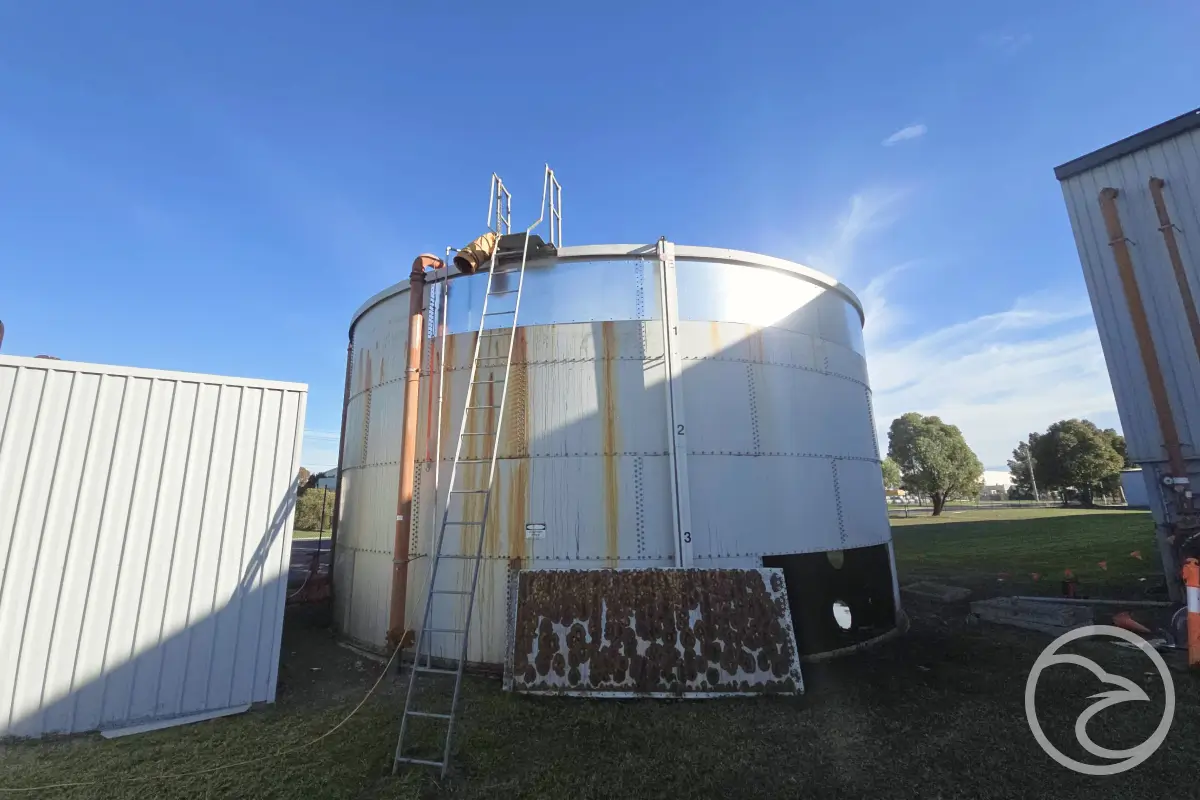
Rust staining on steel tanks can indicate coating deterioration or corrosion around joints and fasteners. Water trails may help identify potential leakage paths.
However, visible staining alone cannot establish whether a tank is actively leaking.
Bulging or Misaligned Panels
Panel distortion can indicate abnormal structural loading or movement. These conditions may affect joint compression and increase the likelihood of leakage.
Visible deformation requires assessment before attempting repairs.
Repeated Leakage After Repairs
Recurring leaks can indicate that earlier repairs addressed symptoms rather than the underlying cause. For example, replacing a gasket may not resolve leakage caused by foundation settlement or panel misalignment.
Repeated failures should prompt a broader inspection of the tank structure.
How to Detect Water Tank Leaks
Effective water tank leak detection begins with identifying where water escapes and why containment has failed. The inspection method depends on tank accessibility, construction, operating conditions, and suspected defects.
External Visual Inspection
An external inspection examines accessible tank surfaces, connections, and surrounding areas.
Inspectors may look for:
-
Wet joints and water trails
-
Corrosion or damaged coatings
-
Cracks and panel distortion
-
Moisture around the foundation
-
Damaged pipe connections
-
Signs of previous unsuccessful repairs
External inspections provide useful evidence but may not identify concealed defects.
Internal Tank Inspection
Internal inspection allows closer examination of surfaces that cannot be assessed externally. Inspectors may evaluate floor panels, internal joints, corrosion, liners, and structural components.
The inspection approach must account for access restrictions, water quality, and safety requirements. Some inspections require draining and controlled entry. Others can be completed while the tank remains filled.
ROV Water Tank Inspection
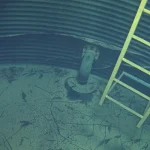
Remotely operated vehicles can inspect submerged internal surfaces without requiring personnel to enter the water. ROV inspections may identify visible corrosion, damaged joints, liner defects, and other underwater abnormalities.
Recorded footage can support defect documentation and further assessment. However, an ROV cannot reliably identify every concealed leak or determine structural integrity from footage alone.
Additional testing may be necessary to confirm suspected defects.
Understanding the differences between water tank inspections using ROVs and drones helps determine which method suits specific inspection requirements.
Water Level Monitoring
Monitoring water levels can help establish whether unexplained water loss is occurring. Reliable assessment requires consideration of consumption, inflow, evaporation, overflow, and other operational variables.
Water level monitoring identifies possible loss but does not independently locate its source.
Targeted Leak Testing
Specialist testing may be required when visual evidence is inconclusive. The appropriate method depends on the tank material, access, water quality, and suspected leakage location.
Testing should be selected by qualified personnel and performed without compromising the tank’s structural integrity.
Can Water Tank Leakage Cause Structural Damage?
Water leakage and structural damage can influence each other. A structural defect may cause leakage, while uncontrolled leakage can worsen conditions around the tank.
For example, persistent water escape near the foundation may contribute to soil erosion or changes in ground conditions. The severity depends on soil characteristics, drainage, leakage volume, and foundation design.
Other possible consequences include:
-
Accelerated corrosion around damaged steel surfaces
-
Deterioration of joints and connections
-
Damage to nearby equipment and infrastructure
-
Increased maintenance requirements
-
Reduced operational reliability
Importantly, leakage does not automatically mean a tank is structurally unsafe. A qualified assessment is needed to establish the extent of damage and appropriate corrective action.
How to Repair a Leaking Water Tank
Water tank leak repair should address the confirmed cause rather than the visible symptom alone. The correct method depends on the tank material, defect location, structural condition, and operational requirements.
Joint and Gasket Repairs
Deteriorated gaskets and failed seals may require replacement. Fasteners and adjoining panels should also be inspected for corrosion, movement, or misalignment.
Replacing a seal without correcting structural movement can result in recurring leakage.
Panel Repairs and Replacement
Damaged sectional tank panels may require repair or replacement, depending on their condition. Inspectors should assess corrosion, deformation, connection integrity, and the surrounding structure.
Panel replacement must follow appropriate engineering and manufacturer requirements.
Crack and Surface Repairs
Localised defects may be suitable for specialist repair systems. However, repair materials must be compatible with the tank construction and stored water.
Structural cracks require appropriate assessment before selecting a repair method.
Tank Liner Repairs
Certain liner defects can be repaired using compatible patching or seam-repair techniques. The feasibility depends on liner material, defect size, location, and overall liner condition.
Extensive deterioration may make liner replacement more appropriate than repeated local repairs.
Structural Repairs
Where leakage results from deformation or foundation movement, structural issues must be addressed first. Repairs may involve specialist assessment, component replacement, foundation remediation, or other engineered corrective measures.
Professional water tank repairs can restore damaged components once the underlying cause has been identified.
Water Tank Repair vs Relining vs Replacement
Not every leaking tank requires the same solution. Repair, relining, refurbishment, and replacement serve different purposes.
| Option | When It May Be Appropriate | Main Consideration |
|---|---|---|
| Localised repair | Isolated joint, seal, or panel defects | Underlying structure must remain suitable |
| Tank relining | Deteriorated containment barrier with a suitable supporting structure | Liner compatibility and substrate condition |
| Tank refurbishment | Multiple defects requiring coordinated restoration | Overall structural and economic feasibility |
| Tank replacement | Extensive deterioration or impractical restoration | Long-term reliability and lifecycle cost |
When is Tank Repair the Better Option?
Localised repair may be suitable when damage is limited and the tank remains structurally sound. For example, replacing a failed gasket may resolve leakage in an otherwise serviceable sectional tank.
The decision should consider inspection findings, expected service life, and future maintenance requirements.
When Should a Water Tank be Relined?
Relining may be appropriate when the existing containment barrier has deteriorated but the supporting tank remains suitable. A new liner can restore water containment without necessarily replacing the entire tank.
However, relining cannot correct significant structural instability or foundation defects. Tank surfaces, penetrations, and structural components must be assessed before installation.
When is Tank Refurbishment Necessary?
Refurbishment may be appropriate when several components require restoration. This can include combinations of panel repairs, joint replacement, coating restoration, and liner works.
Professional tank refurbishment should follow a detailed condition assessment and clearly defined repair scope.
When is Replacement More Practical?
Replacement may be more appropriate when structural deterioration is extensive or repair costs become disproportionate. Other considerations include operational requirements, future capacity, accessibility, and expected remaining service life.
A condition assessment helps compare the practical and financial implications of each option.
When Should a Leaking Water Tank be Replaced?
A leaking tank does not automatically need replacement. However, some conditions make continued repairs less practical or potentially unsuitable.
These include:
-
Extensive corrosion affecting multiple structural components
-
Significant deformation or compromised structural stability
-
Widespread deterioration of joints and panels
-
Repeated leakage despite appropriate repairs
-
Foundation problems that cannot be economically remediated
-
Repair costs approaching the cost of replacement
The final decision should consider engineering findings, lifecycle costs, and operational requirements. For fire water tanks, any proposed repair or replacement must also consider system availability and applicable compliance obligations.
How to Prevent Water Tank Leakage
Preventive maintenance helps identify deterioration before it develops into significant leakage. An effective maintenance approach should reflect tank construction, operating conditions, age, and risk.
Schedule Regular Tank Inspections
Routine inspections help identify early signs of corrosion, joint deterioration, liner damage, and structural movement. Inspection frequency should reflect applicable standards, manufacturer recommendations, and site-specific conditions.
Monitor Joints and Connections
Bolted joints, seals, and pipe penetrations are important inspection points. Changes in alignment, visible corrosion, or persistent moisture may indicate developing problems.
Maintain Protective Coatings and Liners
Protective systems help reduce deterioration and maintain containment performance. Damaged coatings and liners should be assessed before defects become more extensive.
Inspect Foundations and Drainage
Poor drainage can contribute to moisture accumulation around the tank foundation. Inspectors should look for erosion, standing water, settlement, and changes in surrounding ground conditions.
Investigate Small Leaks Promptly
Minor leakage can become more difficult to repair when underlying deterioration continues. Early investigation can help identify manageable defects before extensive restoration becomes necessary.
Water Tank Leakage in Fire Water Storage Systems
Leakage in a fire water tank requires particular attention because it may affect available firefighting water. Even relatively small losses can become significant if they remain undetected.
Inspection and maintenance should consider the tank’s role within the fire protection system. In Australia, AS 1851 establishes requirements for routine servicing of relevant fire protection systems.
Applicable requirements depend on the system, equipment, and adopted regulatory framework. A leakage investigation should also consider relevant tank design requirements and manufacturer specifications.
Any work affecting fire protection availability requires appropriate planning and coordination.
A comprehensive fire tank inspection checklist helps identify potential leakage, corrosion, damaged joints, and other maintenance concerns.
Final Considerations
Water tank leakage should be investigated before choosing a repair method. A visible leak may originate from a simple seal defect or indicate more extensive structural deterioration.
Professional inspection helps identify the cause, assess associated risks, and determine whether repair, relining, refurbishment, or replacement is appropriate.
Addressing defects early can reduce water loss, protect surrounding infrastructure, and support reliable long-term tank operation.