Choosing the right tank material affects performance, maintenance, installation, and long-term reliability. Glass reinforced plastic offers several properties that make it suitable for modern water storage systems.
The main advantages of GRP include corrosion resistance, low weight, strength, flexibility, and modular construction. However, GRP tanks are not maintenance-free or suitable for every application.
Their performance depends on correct design, installation, operating conditions, inspections, and ongoing maintenance. This guide explores the main GRP tank advantages and their practical importance.
It also compares GRP with other common tank materials and examines typical applications.
What Makes GRP Suitable for Water Tanks?
GRP stands for glass reinforced plastic, also known as glass reinforced polymer. The material combines a polymer resin with glass fibre reinforcement. This combination provides strength while keeping the finished components relatively lightweight.
GRP can also resist many environmental conditions that cause deterioration in traditional materials. These characteristics make GRP suitable for modular panel tank construction. Individual panels can be manufactured separately and assembled into the required tank configuration.
This approach provides flexibility for different capacities, locations, and site restrictions. The material properties also influence installation requirements and long-term tank maintenance.
Understanding these characteristics helps explain the most important advantages of GRP tanks.
Key Advantages of GRP Tanks
Different projects require different tank characteristics. However, several GRP properties provide practical advantages across many water storage applications.
1. Strong Corrosion Resistance
Corrosion resistance is one of the most recognised GRP advantages. GRP does not rust like unprotected ferrous metals. This characteristic can be particularly valuable where tanks face moisture or challenging environmental conditions.
Corrosion can gradually weaken metallic tank components and damage protective surfaces. It may eventually cause leaks or structural concerns without appropriate maintenance. GRP avoids many problems directly associated with metallic corrosion.
Therefore, corrosion resistant GRP tanks can provide an attractive option for suitable water storage environments. However, corrosion resistance does not mean complete resistance to every chemical or operating condition.
The selected GRP system must remain compatible with the stored liquid and expected environment.
2. High Strength-to-Weight Ratio
GRP combines useful structural strength with relatively low material weight. This strength-to-weight ratio provides advantages during transportation, handling, and installation. Lighter panels may reduce some logistical challenges associated with heavier tank materials.
This can become important on sites with restricted equipment access. Lower component weight can also simplify movement before final tank assembly. However, lightweight construction does not remove structural design requirements.
The tank must still accommodate water pressure, external loads, supports, and site-specific conditions. Correct engineering remains essential for reliable long-term performance.
3. Modular Construction
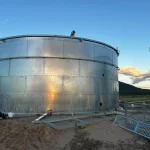
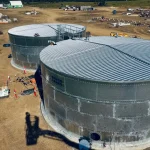
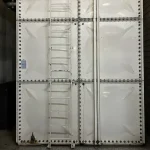
Modularity is another important advantage of many GRP panel tanks. Instead of transporting one complete tank, manufacturers can supply individual panels for site assembly. This approach makes different tank sizes and configurations possible.
It can also help where access routes prevent delivery of large prefabricated tanks. Panels can often pass through access points that would restrict larger tank structures.
This feature makes modular systems useful for certain internal and constrained locations. The configuration can be designed around available space and required storage capacity.
Modularity can also support future component replacement when the tank design permits it.
4. Flexible Tank Configurations
Every water storage project has different spatial and operational requirements. GRP panel construction provides considerable flexibility when designing tank dimensions. A system may be configured around available length, width, and height.
This can help maximise storage capacity within restricted plant rooms or designated tank areas. Different capacities can also be achieved through changes to the panel arrangement. That flexibility distinguishes modular tanks from many fixed-size storage solutions.
However, available space alone should never determine the final configuration. Access, foundations, maintenance clearances, pipework, and structural requirements also require consideration.
5. Easier Transportation and Site Handling
Transporting large tanks can create logistical difficulties. Oversized structures may require specialised vehicles or complicated site access arrangements. GRP panel water tanks offer another approach.
Separate panels can be transported and moved before final assembly. This may reduce difficulties on sites with narrow entrances or limited access. It can also benefit projects inside existing buildings.
Individual components remain easier to position than one large prefabricated structure. Site conditions still require careful planning before installation begins.
Panel dimensions, lifting requirements, storage space, and assembly access must remain part of that planning.
6. Reduced Dependence on Protective Coatings
Some tank materials require protective systems to control corrosion. Those coatings may need monitoring, repair, or eventual renewal. GRP does not depend on conventional anti-corrosion coatings in the same way as carbon steel.
This can remove one maintenance consideration from the tank lifecycle. It can also reduce concerns about coating deterioration exposing the underlying tank material. However, GRP surfaces can still experience wear, damage, ageing, or other deterioration.
Regular condition assessment therefore remains necessary.
7. Durability in Suitable Environments
A correctly specified GRP tank can provide durable service under appropriate operating conditions. Its resistance to rust contributes significantly to this performance. The material can also tolerate many environmental exposures when correctly selected.
However, tank durability depends on more than panel material. Joints, seals, supports, fittings, connections, and installation quality also affect long-term performance. Operating conditions can change during the tank’s service life.
For this reason, durability should be considered a system characteristic rather than one material property.
8. Potentially Lower Maintenance Demands
Another commonly discussed advantage of GRP tanks is reduced maintenance demand. This benefit requires some qualification. GRP eliminates certain corrosion-related maintenance tasks associated with some metallic tanks.
For example, the tank panels do not require protection against rust in the same manner. However, the complete tank still requires ongoing attention. Seals can deteriorate, joints can develop problems, and components may become damaged.
Sediment or contamination may also develop depending on the stored water and operating conditions. Therefore, GRP should be described as corrosion resistant rather than maintenance-free.
9. Suitability for Hygienic Water Storage
GRP systems can be designed for potable and other clean water storage applications. Appropriate materials must be selected for the intended water use. Tank design also needs to protect stored water from external contamination.
Covers, access points, vents, overflows, and other components influence overall hygiene. Regular cleaning and inspection remain important throughout the tank lifecycle. The tank material alone cannot guarantee stored water quality.
Good design, installation, operation, and maintenance must work together.
10. Component-Based Repair Opportunities
Modular construction can provide useful maintenance advantages. Damage may sometimes affect a particular panel, joint, seal, or fitting rather than the entire structure. Depending on the tank condition, targeted repairs may therefore be possible.
This approach can reduce unnecessary replacement of unaffected components. However, repairs should follow a proper condition assessment. Visible damage may sometimes indicate broader structural or installation problems.
For projects requiring flexible water storage, GRP panel tanks provide a practical solution for varied capacities and site conditions.
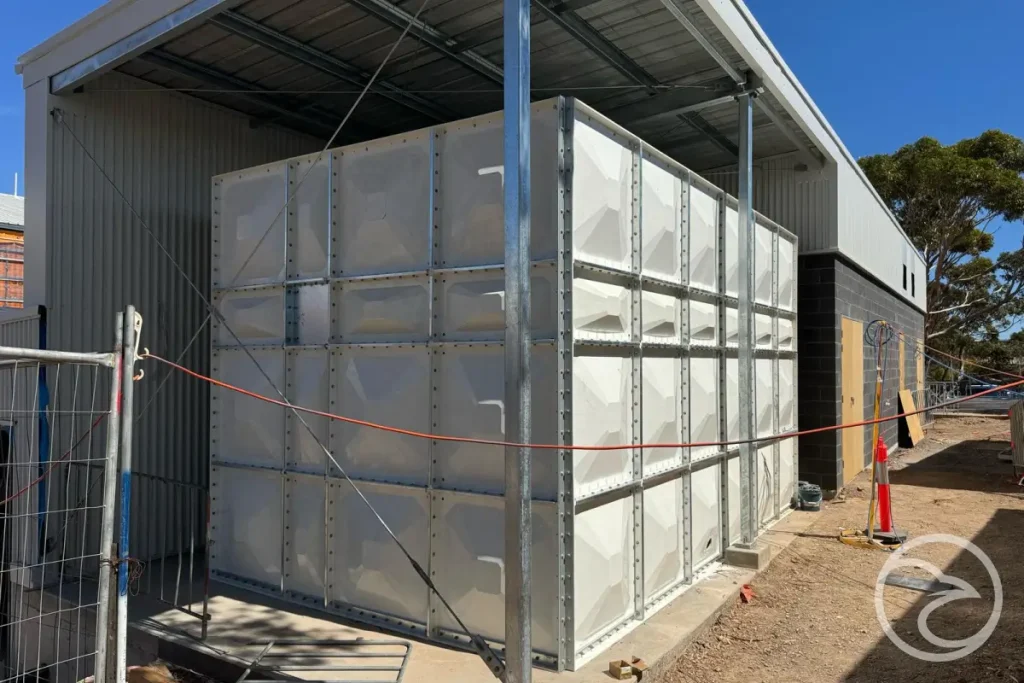
GRP Panel Tanks Compared with other Tank Materials
No tank material provides the best solution for every project. Steel, concrete, polyethylene, and GRP each offer different characteristics.
Understanding these differences helps explain where GRP advantages become particularly relevant.
GRP vs Steel Tanks
Steel provides high structural strength and remains widely used for water storage. However, steel can be vulnerable to corrosion when protective systems deteriorate. Coatings, galvanising, or other protection methods can help control this risk.
GRP does not rust, giving it an advantage in environments where corrosion is a major concern. GRP panels can also be lighter than comparable steel components.
This difference may simplify transportation and site handling. However, steel may offer advantages for particular structural, capacity, or project requirements.
The correct choice depends on engineering requirements rather than one material property.
GRP vs Concrete Tanks
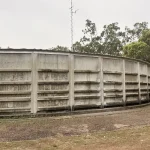
Concrete provides substantial mass and can support large water storage applications. It can also be integrated into permanent building or infrastructure designs. However, concrete structures can develop cracks or experience other forms of deterioration.
Some concrete tanks may also require internal lining systems. GRP lining for concrete water tanks can sometimes form part of a rehabilitation approach. This application differs from installing a complete GRP panel tank.
GRP panel tanks are significantly lighter than concrete structures. Their modular construction can also provide installation advantages in restricted locations.
Concrete may remain preferable where its structural characteristics suit the project better.
GRP vs Polyethylene Tanks
Polyethylene tanks are common across many smaller and medium water storage applications. They are corrosion resistant and are often supplied as complete moulded units. GRP panel tanks use a different construction approach.
Their modular design allows configurations that may suit larger or restricted-access installations. Individual GRP panels can be transported before site assembly. A large moulded polyethylene tank requires enough access for the complete unit.
Polyethylene remains highly practical for many applications. The decision depends on capacity, site access, structural needs, and operating conditions.
Where are GRP Panel Tanks Commonly Used?
The benefits of GRP become clearer when considered alongside practical applications. Different characteristics solve different site and storage challenges.
Potable Water Storage
GRP tanks can be used for potable water when suitable approved materials and designs are specified. Corrosion resistance can be valuable for long-term water storage systems.
However, water hygiene requires more than selecting an appropriate tank material. Cleaning, inspection, covers, vents, and correct operation remain essential.
Commercial Buildings
Commercial properties often require dedicated water storage within limited plant areas. Modular GRP construction can provide flexibility for these locations.
Panels may be transported through building access routes before assembly. This can help where installing a complete prefabricated tank would be difficult.
Industrial Facilities
Industrial sites can have complex storage requirements and challenging operating environments. GRP tanks may suit certain process water and general water storage applications.
Material compatibility must always be confirmed for the intended contents. Not every resin system is suitable for every liquid or temperature.
Fire Protection Water Storage
Reliable stored water can form an important part of fire protection infrastructure. GRP tanks may be considered for certain fire water storage applications.
Tank capacity, structural design, fittings, access, and applicable requirements must all receive careful consideration. Ongoing inspection is especially important where stored water supports critical systems.
Rainwater Storage
Rainwater collection systems require suitable storage before water is reused or managed. GRP tanks can provide modular storage for appropriate rainwater applications.
Their configuration flexibility can help where available installation space is limited. Stored water quality and intended reuse should influence system design and maintenance.
Restricted-Access Sites
Restricted access is one area where GRP panel tanks can offer significant practical benefits. Large complete tanks may be impossible to move through existing buildings.
Separate panels provide more flexibility during transportation and positioning. They can then be assembled within the designated tank area.
This makes modular construction useful for some retrofit and replacement projects.
Why Maintenance Still Matters for GRP Panel Tanks
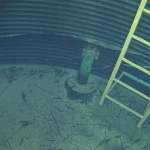
Corrosion resistance sometimes creates the impression that GRP tanks require very little attention. That assumption can cause important problems to remain unnoticed. A GRP tank consists of more than its reinforced panels.
Joints, seals, supports, bolts, fittings, pipe connections, and access components form part of the complete system. These components can experience wear or deterioration over time. Operating conditions can also affect the internal tank environment.
Sediment, biological growth, debris, or other contamination may accumulate without appropriate management. Maintenance should therefore address the entire tank system.
Typical maintenance considerations include:
- checking panels for visible damage or deterioration;
- examining joints and seals for leakage;
- checking fittings and pipe connections;
- assessing internal cleanliness;
- checking structural supports and accessible components;
- identifying unusual movement or deformation;
- monitoring signs of water loss;
- maintaining suitable access and safety provisions.
Maintenance requirements will vary between tanks. Age, design, location, water quality, usage, and operating conditions all influence appropriate maintenance planning.
Regular water tank maintenance helps preserve tank condition, prevent avoidable deterioration, and support reliable long-term water storage.
The Importance of Regular GRP Tank Inspections
Inspections provide information that routine observation may not reveal. A tank can appear functional while developing smaller defects. Regular inspections help identify changes before they develop into more serious problems.
Inspectors can assess accessible panels, joints, seals, connections, and other important components. They can also look for leakage, deterioration, deformation, contamination, or unusual conditions. Inspection findings provide a useful basis for maintenance planning.
They can help owners prioritise repairs instead of responding only after failures occur. Inspection records can also show how tank condition changes over time. This history becomes increasingly valuable as the system ages.
The appropriate inspection approach depends on the tank and its application. Critical water storage systems may require particularly structured condition monitoring. Most importantly, inspection should remain part of ongoing asset management.
Corrosion resistance should never replace regular condition assessment. Understanding the signs of damage in GRP panel tanks can help identify developing issues before they affect tank performance.
Factors that can Affect GRP Water Tank Performance
The advantages of GRP depend on correct specification and operation. Poor design or installation can reduce the benefits of any tank material. Several factors deserve consideration.
Stored liquid: The GRP system must be chemically compatible with the intended contents.
Temperature: Operating temperatures should remain within the system’s design limits.
Structural loads: Water pressure and external loads must be considered during design.
Foundation: Tanks require suitable support according to their structural requirements.
Installation quality: Correct assembly is important for panels, seals, joints, and connections.
Environment: Exposure conditions may influence materials and maintenance requirements.
Access: Enough space should remain available for inspection, cleaning, and repairs.
Maintenance: Regular attention helps preserve the condition of the complete tank system.
Considering these factors during planning supports better long-term outcomes.
Are GRP Tanks the Right Choice for Every Application?
GRP offers valuable characteristics, but it is not automatically suitable for every water storage project. Material selection should begin with the actual operating requirements. Capacity is one consideration.
Available space, structural support, access, stored liquid, and environmental conditions are equally important. Future maintenance requirements should also influence the decision. A tank that fits the available space still requires practical inspection and repair access.
Alternative materials may offer stronger advantages for particular operating conditions. Steel may suit certain structural requirements. Concrete can provide advantages for permanent large-scale structures.
Polyethylene can offer a simple solution for many smaller installations. GRP becomes particularly attractive when corrosion resistance and modular construction are important priorities.
The best material therefore depends on the complete project rather than one individual advantage.
Understanding GRP Tank Advantages in Context
GRP water tanks combine several useful characteristics for modern water storage. Their major advantages include corrosion resistance, low weight, modularity, and configuration flexibility. These properties can simplify transportation and installation in challenging locations.
They can also reduce certain corrosion-related maintenance demands. However, GRP tanks still require appropriate design, installation, maintenance, and regular inspections. Joints, seals, fittings, supports, and internal conditions remain important throughout the tank lifecycle.
GRP should therefore be viewed as a durable material option rather than a maintenance-free solution. Understanding both its strengths and limitations supports better water storage decisions.
The right tank ultimately depends on its application, environment, capacity, access, and long-term operational requirements.