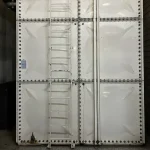
Fire water storage tanks are an important part of many Australian fire protection systems. They provide a dedicated water supply when sprinklers, hydrants, or other systems need to operate during a fire.
Because these tanks support critical fire protection infrastructure, their design cannot be treated like ordinary water storage. Tank capacity, construction, foundations, connections, access, and other components can directly affect system reliability.
Australian Standards provide requirements for these tanks throughout different stages of their lifecycle.
One important document is AS 2304-2011, Water storage tanks for fire protection systems. It established requirements for the design, construction, installation, commissioning, and maintenance of certain fire water storage tanks.
However, AS 2304-2011 is no longer the current edition. It was superseded by AS 2304:2019, which is now the current standard.
AS 2304 should also be understood alongside AS 1851-2012. While AS 2304 primarily addresses how fire tanks are designed and installed, AS 1851 addresses their ongoing routine servicing.
Together, these standards help connect correct tank design with long-term operational condition.
This guide explains AS 2304-2011, what it covers, why it matters, and how it relates to fire tank inspections. It also explains the important relationship between AS 2304 and AS 1851.
What is AS 2304-2011?
AS 2304-2011 is an Australian Standard titled Water storage tanks for fire protection systems. Standards Australia published the first edition in July 2011. Its purpose was to establish minimum requirements for water storage tanks supporting fire protection systems.
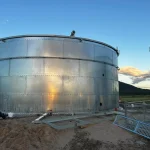
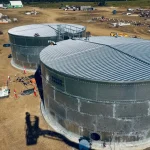
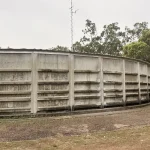
The standard addressed the design, construction, installation, commissioning, and maintenance of bolted steel circular and rectangular fire water tanks. Its scope covered the tank structure, foundation, penetrations, and related accessories.
It included bolted steel and bolted cast-iron tanks, both with and without liners. It also addressed relevant accessories for other fire service tanks.
The standard was developed specifically around fire protection water storage.
This distinction matters because a fire tank performs a safety-critical function.
Its purpose is not simply to hold water. It must support the fire protection system when that water is required.
Is AS 2304-2011 Still Current?
No. This is an important distinction for facility owners researching the standard today. AS 2304-2011 has been superseded by AS 2304:2019. The 2019 edition is currently listed as the current version of the standard.
The current standard retains the title Water storage tanks for fire protection systems. AS 2304:2019 establishes minimum requirements for the design, construction, installation, and commissioning of bolted steel circular and rectangular fire water tanks.
The distinction between editions is important when reviewing an existing fire tank. An older tank may have been designed or installed when the 2011 edition applied.
New projects should consider the current applicable requirements rather than automatically relying on AS 2304-2011. Applicable building approvals, regulations, referenced standards, and original design requirements should also be considered.
Why do Fire Water Tanks Need a Dedicated Standard?
A fire water tank differs from an ordinary storage tank because its contents support fire protection. During an emergency, the system needs a reliable supply of water. Problems with the tank can potentially affect the wider fire protection system.
For example, serious deterioration could affect:
- available water storage;
- structural integrity;
- tank connections;
- suction arrangements;
- access;
- associated fire protection equipment.
A dedicated standard helps establish consistent requirements for tank design and installation. The objective is to ensure that the tank is suitable for its intended fire protection function from the beginning.
What Does AS 2304 Cover?
AS 2304 addresses several important parts of a fire water storage system. The 2011 edition covered minimum requirements relating to the tank structure, foundation, penetrations, and related accessories.
Broadly, the standard addresses areas such as:
- tank design;
- construction;
- materials;
- foundations;
- installation;
- penetrations;
- tank accessories;
- commissioning;
- water-related design considerations.
These requirements help establish the original condition and configuration expected from the tank. That original design information later becomes important during inspections and routine servicing.
What Types of Fire Tanks Does AS 2304 Apply to?
The 2011 standard primarily established requirements for bolted steel circular and rectangular water tanks. Its scope included bolted steel and bolted cast-iron tanks with or without liners. It also provided requirements for accessories associated with other fire service tanks.
The current AS 2304:2019 similarly focuses on bolted steel circular and rectangular tanks. It also specifies accessory requirements for fire protection tanks made from other materials.
This is an important nuance. Facility owners should not assume that every requirement applies identically to every possible tank material or configuration. The tank’s original design documentation should be reviewed alongside the applicable standard.
What Fire Protection Systems can these Tanks Support?
Fire water tanks can supply different water-based fire protection systems. The 2011 scope included applications associated with automatic sprinkler and fire hydrant systems. In practice, the tank operates as part of a broader fire protection arrangement.
This can involve:
- fire pumps;
- suction pipework;
- hydrant systems;
- sprinkler systems;
- valves;
- monitoring equipment;
- associated water supply infrastructure.
The tank therefore cannot always be assessed in isolation. A problem with one component can potentially influence other parts of the system.
Why is AS 2304 Important for Australian Fire Safety?
Fire protection systems are designed around expected performance. A water storage tank must provide the conditions required by the system it supports. Correct initial design is therefore fundamental.
AS 2304 provides a consistent framework for designing and installing suitable fire water storage tanks. It helps establish requirements before the tank enters service.
This can support:
- appropriate tank construction;
- reliable water storage;
- suitable foundations;
- correct accessories;
- appropriate connections;
- commissioning;
- integration with fire protection systems.
However, correct installation is only the beginning. A tank can change significantly during decades of service. This is why ongoing inspection and servicing become important after commissioning.
AS 2304 and the Fire Tank Lifecycle
A useful way to understand AS 2304 is to consider the complete tank lifecycle.
A fire tank generally moves through several stages:
- Design.
- Construction.
- Installation.
- Commissioning.
- Operation.
- Routine servicing.
- Maintenance and repair.
- Eventual refurbishment or replacement.
AS 2304 is particularly important during the earlier stages. AS 1851 becomes especially relevant once the tank is operating and requires routine servicing. This distinction explains why the two standards are closely connected but not interchangeable.
What is AS 1851-2012?
AS 1851-2012, Routine service of fire protection systems and equipment, addresses the routine servicing of fire protection systems after installation. Its scope covers routine service procedures across a broad range of fire protection equipment.
Importantly for fire tank owners, Section 5 specifically addresses water storage tanks for fire protection systems. That section establishes requirements for routine servicing involving inspection, testing, preventive maintenance, and survey activities.
AS 1851 therefore has a different role from AS 2304. AS 2304 helps establish how the tank should be designed and installed. AS 1851 helps establish how the installed tank should be routinely serviced.
Visit our AS1851 fire tank inspections page to learn how professional inspections support compliance and reliable fire water storage.
AS 2304 vs AS 1851: what is the Difference?
This is one of the most important distinctions for facility owners. The standards relate to the same broader fire protection environment but serve different purposes.
| AS 2304 | AS 1851 |
|---|---|
| Fire water storage tank standard | Routine service standard |
| Focuses strongly on design and installation | Focuses on systems already in service |
| Covers tank construction requirements | Covers routine inspection and testing |
| Addresses commissioning | Addresses ongoing servicing |
| Establishes initial requirements | Helps monitor ongoing condition |
| Relevant when creating the asset | Relevant throughout its operational life |
They should not be treated as competing standards. They address different stages of fire tank management.
Why does AS 2304 Matter During Fire Tank Inspections?
An inspection needs a point of reference. Simply looking at a tank and deciding whether it “looks good” provides limited information. Inspectors need to understand the tank’s intended configuration and performance.
Original design information can help establish that baseline. AS 2304 is relevant because it provides requirements relating to how the fire tank was designed, constructed, installed, and commissioned.
Inspection can then consider whether important elements remain in suitable condition. For older assets, the applicable standard at the time of installation may also help explain the original tank configuration.
What is Checked During a Fire Tank Inspection?
The exact inspection scope depends on the tank, applicable requirements, and type of assessment. AS 1851 identifies several areas requiring particular attention in fire water storage tanks.
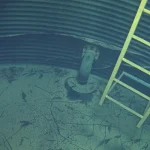
These include corrosion affecting internal and external components such as suction inlets, vortex inhibitors, tie rods, fittings, and roof supports. The condition of an installed liner is also specifically identified.
An assessment may therefore consider:
- tank walls and panels;
- internal corrosion;
- external corrosion;
- roof condition;
- supports;
- tie rods;
- bolts and fasteners;
- liners;
- suction components;
- vortex inhibitors;
- penetrations;
- fittings;
- visible leaks;
- structural changes;
- access components.
The purpose is to determine whether deterioration or defects could affect the tank’s ongoing condition. Facility owners can also use our fire tank compliance checklist to understand the key areas commonly reviewed during fire tank assessments.
Why is Corrosion Important?
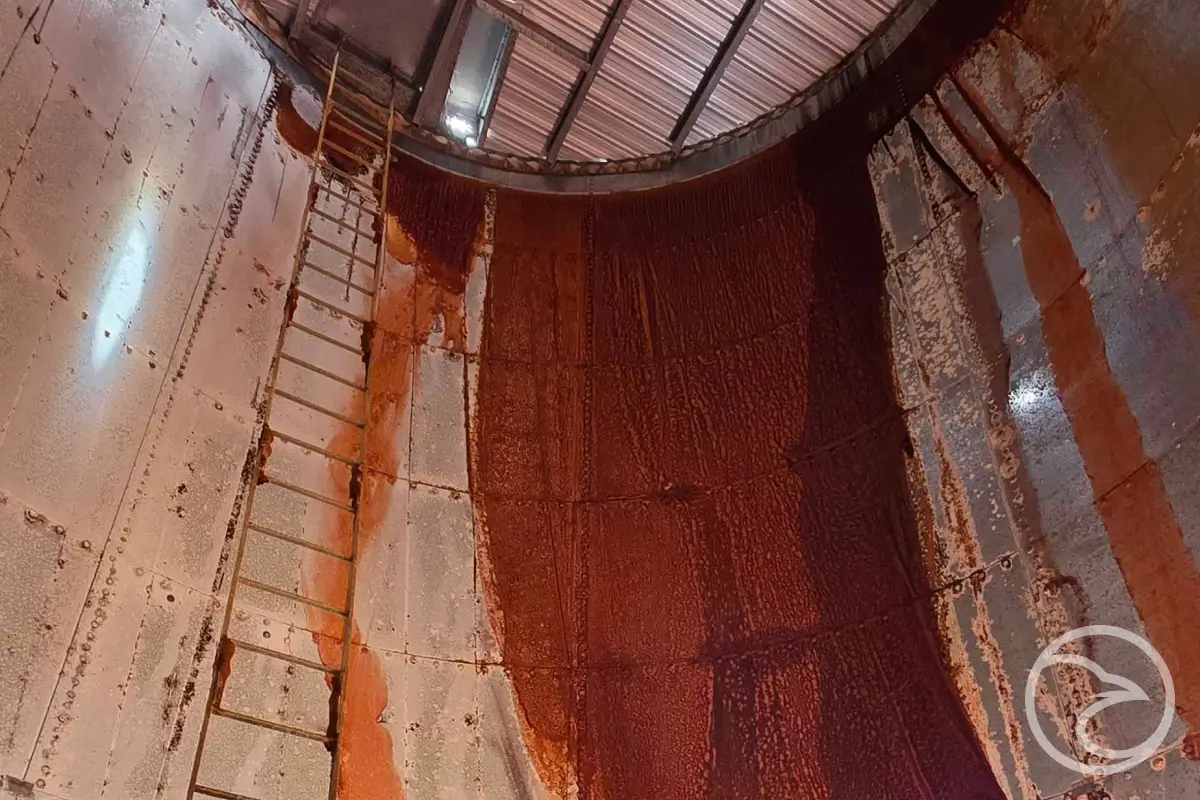
Steel fire tanks can operate for many years in demanding environments. During that time, corrosion may develop internally or externally. The significance depends on location, severity, material loss, and progression.
Corrosion around a non-critical external component may present a different risk from deterioration affecting structural or suction components. AS 1851 specifically identifies corrosion of several internal and external fire tank components as an area requiring attention.
Regular inspection allows these areas to be monitored over time. This can help facility owners identify deterioration before it becomes substantially more extensive.
Why are Fire Tank Liners Inspected?
Some fire water tanks contain internal liners. A liner can provide the primary water containment barrier within the supporting tank structure. Damage can therefore affect the tank’s ability to retain water.
AS 1851 specifically identifies liner condition as an element requiring attention during routine servicing.
Possible concerns can include:
- tears;
- punctures;
- seam deterioration;
- movement;
- damage around fittings;
- local wear.
The presence of a liner does not remove the need to consider the supporting tank structure. Both systems contribute to overall performance.
What is the Role of Baseline Data?
Baseline information helps establish what the system looked like when correctly commissioned. This is valuable during future servicing. Without reliable baseline information, it can be more difficult to determine whether a condition represents a defect or an original design feature.
AS 1851 includes provisions concerning baseline data and service records.
Relevant documentation may include:
- original design information;
- commissioning records;
- tank specifications;
- previous service reports;
- repair records;
- photographs;
- previous defect reports.
Good records provide context. They allow current findings to be compared with previous conditions rather than assessed in isolation.
The Role of Reporting Under AS 1851
Inspection is only useful when findings lead to appropriate action. Reporting therefore forms an important part of routine servicing.
AS 1851 requires records of servicing activities and provides for reporting of defects, non-conformances, and yearly condition information.
A fire tank report can help communicate:
- what was inspected;
- what condition was observed;
- where defects were identified;
- whether deterioration has changed;
- what requires further attention.
This information can then support maintenance planning. Reports also create a history of tank condition. That history becomes increasingly useful as the asset ages.
Inspection does not Mean Automatic Repair
An important distinction exists between identifying a defect and correcting it. Inspection establishes condition.
A finding may then require:
- monitoring;
- preventive maintenance;
- further assessment;
- cleaning;
- local repair;
- component replacement;
- larger refurbishment.
The appropriate response depends on the finding. Not every observation means the tank needs immediate replacement. Likewise, serious findings should not simply remain recorded without appropriate follow-up.
What Happens when a Fire Tank is Taken out of Service?
Maintenance and inspection sometimes require a fire tank to be drained or taken offline. This creates an important fire safety consideration. AS 1851 contains precautions for planned tank outages exceeding 24 hours. These include advising the owner and making arrangements concerning fire protection water availability.
The standard also references temporary water storage in accordance with AS 2304 where possible. This demonstrates how closely fire tank maintenance is connected to broader system readiness. Draining a fire tank is not equivalent to draining an ordinary water storage tank.
Its temporary absence can affect the fire protection system it supports.
Who Needs to Understand AS 2304 and AS 1851?
These standards can be relevant to several groups involved with fire protection assets.
They include:
- building owners;
- facility managers;
- strata managers;
- property managers;
- developers;
- fire safety practitioners;
- maintenance contractors;
- hydraulic consultants;
- asset managers;
- engineers.
Responsibilities vary according to jurisdiction and project circumstances. Building owners and managers should understand which standards and regulatory requirements apply to their particular assets.
This has become especially important in jurisdictions where AS 1851 is directly referenced by regulation. For example, NSW made AS 1851-2012 mandatory from 13 February 2026 for new and existing Class 1b and Class 2–9 buildings covered by the relevant regulation.
Requirements elsewhere in Australia can differ, so local obligations should always be confirmed.
Why Routine Fire Tank Inspection Matters
A fire water tank may spend almost its entire life waiting for an emergency. That can create a false impression that little is happening to the asset. In reality, deterioration can continue during normal operation.
Possible changes include:
- corrosion;
- liner deterioration;
- seal ageing;
- component damage;
- structural movement;
- leaks;
- sediment accumulation;
- roof deterioration;
- fitting problems.
Some changes may be obvious externally. Others can remain hidden inside the tank. Routine inspection helps establish whether the tank remains in appropriate condition rather than assuming that stored water means everything is functioning correctly.
AS 2304 and Existing Fire Tanks
Existing tanks require particular care when discussing standards. A tank installed many years ago may have been designed under an earlier standard or approval framework.
That does not automatically mean it should be judged as though it were newly installed today. Original design, commissioning information, regulatory requirements, alterations, and current servicing obligations can all be relevant.
This is another reason baseline documentation matters. It helps establish what the tank was designed to achieve. When substantial modifications or replacement are planned, current requirements should be reviewed.
AS 2304:2019 and New Fire Tank Projects
For current projects, AS 2304:2019 has replaced the 2011 edition. The current standard establishes minimum requirements for the design, construction, installation, and commissioning of bolted steel circular and rectangular fire water storage tanks.
It also addresses required accessories for fire tanks constructed from other materials. New fire tank projects should therefore not simply specify AS 2304-2011 because it appears in older documentation.
The current project requirements should be confirmed with the relevant designers, practitioners, authorities, and regulatory framework.
How AS 2304 and AS 1851 Work Together
The easiest way to understand the relationship is to consider one as establishing the asset and the other as helping manage it. AS 2304: design, construction, installation and commissioning. AS 1851: routine servicing after the system is operational.
A tank can be correctly designed on day one but deteriorate over time. Conversely, regular servicing cannot correct fundamental problems created by unsuitable original design. Both stages matter.
Good fire tank management therefore requires attention from initial design through the entire operating life of the asset.
What can Happen without Appropriate Inspection and Maintenance?
A fire tank may continue holding water while individual components deteriorate. Without appropriate assessment, these problems can remain unnoticed.
Potential concerns include:
- progressing corrosion;
- deteriorated structural components;
- liner damage;
- leakage;
- damaged roof supports;
- problems around suction components;
- deteriorated fittings.
The main concern is reliability. A fire water tank exists to support a safety-critical system. Problems should ideally be identified during planned servicing rather than during an emergency.
Why Documentation Matters
Documentation connects design, inspection, and maintenance. Original records establish how the tank was intended to operate. Inspection reports show how its condition changes. Maintenance records document what was done in response. Together, these documents create an asset history.
Facility owners should retain relevant:
- design records;
- commissioning information;
- baseline data;
- inspection reports;
- maintenance reports;
- repair records;
- photographs;
- modification records.
This information can make future condition assessments significantly more useful.
Final Thoughts
AS 2304 has an important role in Australia’s approach to fire water storage. The original AS 2304-2011 established requirements relating to the design, construction, installation, commissioning, and maintenance of fire water storage tanks. It helped define how these critical assets should be established.
However, facility owners should understand that AS 2304-2011 is now superseded. The current edition is AS 2304:2019. Fire tank management does not end when the tank is commissioned. This is where AS 1851-2012 becomes particularly important. Its Section 5 addresses routine servicing of water storage tanks for fire protection systems.
The relationship between the standards is therefore straightforward. AS 2304 establishes important requirements for the tank at the design and installation stages. AS 1851 supports ongoing assessment once that tank is in service.
Inspection helps connect those two stages. It allows facility owners to compare current tank condition with its intended configuration and identify deterioration requiring attention.
Corrosion, liners, supports, fittings, suction components, and other elements can all change during a tank’s service life. Routine servicing, clear reporting, and appropriate follow-up help ensure those changes are identified and managed.
For Australian facility owners, the broader objective is not simply compliance with a document. It is maintaining a fire water storage system capable of supporting the fire protection infrastructure when it is needed most.