Industrial and commercial storage tanks must operate reliably to support water supply, fire protection, processing systems, and other essential facility needs. When problems arise, they are generally classified into two categories: structural tank issues and operational tank issues. Understanding the difference between them is critical for preventing failures, avoiding unexpected downtime, and maintaining safe long-term tank performance.
This guide explains how structural operational tank issues differ, what causes them, and how they impact the overall condition and efficiency of a water storage system.
Understanding Structural Tank Issues
Structural issues refer to physical problems with the tank’s body, foundation, or supporting components. These issues compromise the tank’s integrity and can pose serious safety risks if left unaddressed.
Common examples include:
- Damage to the tank shell or wall
- Corrosion that weakens structural components
- Cracks in concrete tanks
- Panel deformation in modular tanks
- Roof damage, seams splitting, or weld failures
- Foundation settlement or instability
- Significant coating or liner failure
Structural issues tend to progress over time and often develop due to age, environmental conditions, water chemistry, or insufficient protective measures. If not managed early, they can lead to substantial repair needs or complete tank replacement.
Understanding Operational Tank Issues
Operational issues affect how a tank functions daily but do not typically involve structural integrity. These problems impact system efficiency, water quality, and overall tank performance.
Examples include:
- Sensor malfunctions or inaccurate water-level readings
- Pump or valve performance issues
- Slow fill or discharge rates
- Sediment accumulation on the tank floor
- Poor circulation leading to stagnation
- Inconsistent pressure or flow disruptions
- Inefficient venting or overflow control
While operational issues are not immediately dangerous, they often indicate underlying inefficiencies and can contribute to future structural stress if ignored.
Key Differences Between Structural & Operational Issues
1. Impact on Safety
- Structural issues directly affect tank stability and safety.
- Operational issues affect system performance but typically pose lower immediate safety risks.
2. Repair Priorities
- Structural problems require immediate evaluation and corrective work.
- Operational problems often involve maintenance, calibration, or component replacement.
3. Development Over Time
- Structural deterioration can progress silently and emerge suddenly.
- Operational problems are usually noticed sooner because they affect daily system use.
4. Long-Term Consequences
- Neglected structural issues may lead to tank failure.
- Neglected operational issues can gradually strain the system and contribute to structural problems later.
How Structural Issues Develop Over Time
Even well-maintained tanks experience wear. Factors that commonly lead to structural decline include:
- Long-term exposure to moisture and corrosive environments
- UV damage on external tank surfaces
- Poorly maintained protective coatings
- Fluctuating loads, temperature changes, and hydrostatic pressure
- Foundation shifts due to soil movement
- Ineffective or ageing linings inside the tank
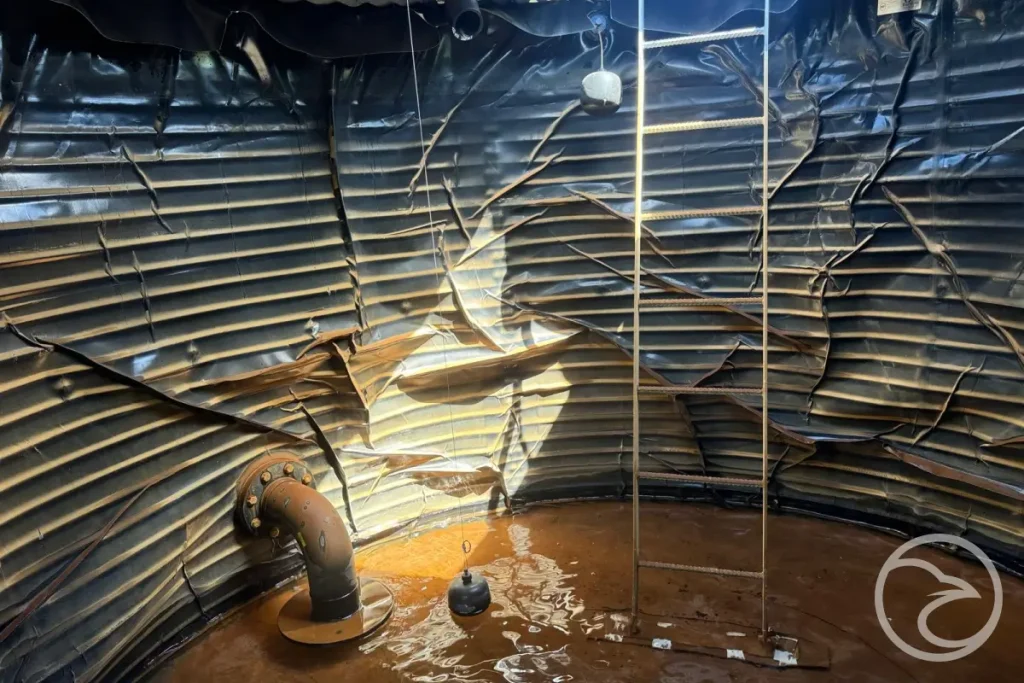
Structural deterioration typically becomes visible through rusting, cracking, bulging, leak traces, or coating breakdown.
Long-term reliability often depends on timely structural reviews supported by specialised tank repair and maintenance practices.
How Operational Issues Begin
Operational problems are often caused by routine wear, equipment ageing, and insufficient system monitoring. Key contributors include:
- Outdated level sensors or control panels
- Sediment buildup reducing water turnover
- Inconsistent cleaning or maintenance schedules
- Blocked vents or overflow systems
- Pump inefficiencies or valve restrictions
- Incorrect calibration of monitoring devices
These issues gradually reduce the efficiency and responsiveness of the storage system.
How Structural & Operational Issues Overlap
Although the two categories differ, they are often interconnected:
- Sediment buildup (operational) can trap moisture and accelerate internal corrosion (structural).
- Faulty sensors (operational) may lead to overfilling, which stresses the tank roof (structural).
- Poor circulation (operational) may increase corrosion on stagnant surfaces (structural).
Understanding these overlaps helps facilities manage problems before they escalate.
Identifying Issues Through Regular Assessment
Routine evaluations are essential for detecting concerns early. A professional review typically covers:
- Internal and external tank surfaces
- Structural supports, bases, and connections
- Water quality and sediment presence
- Sensor accuracy and control system performance
- Coating or liner condition
- Valve, pump, and pipe performance
Such assessments help maintain system stability through ongoing industrial tank upkeep and technical review practiceslinked to tank repair and maintenance obligations.
Conclusion
Both structural and operational tank issues significantly influence the safety, reliability, and performance of water storage systems. Structural problems compromise tank integrity and demand urgent corrective action, while operational issues impact efficiency and daily function.
By understanding the difference, facility owners can prioritise repairs, plan maintenance more effectively, and prevent small problems from developing into costly failures.